A surprising part of teaching 3rd grade measurement is realizing your students understand the math when the skills are isolated, but everything changes once it shows up inside a word problem. I remember watching my students confidently measure objects, compare liquid volume, and solve elapsed time problems. But when those same skills were in a paragraph of text, everything changed. Suddenly, pencils stopped moving. Heads started dropping onto desks. I heard the familiar chorus of groans spread across my room.
I had one student staring at the page without writing anything. Another immediately raised their hand, asking for help before reading the problem through. A few students started guessing because they were overwhelmed by all the words on the page. Even my students who were confident during my lesson suddenly seemed unsure of themselves. This flight or fright can lead to avoidance, off-task behavior, or the belief that they are “bad at math.” Really, they just need more support in breaking down the problem.
Why Measurement Word Problems Feel So Hard
Measurement word problems can feel tricky for our students. They are often trying to use several skills at the same time. Your students may feel confident identifying units, reading a clock, comparing liquid volume, or solving conversion problems. Add those skills to a word problem, and the task now requires reading comprehension, problem solving, and math reasoning. That combination can feel overwhelming.

A lot of your students might struggle to figure out what information is important. They may see several numbers and feel confused about what to do first. Some could focus on the wrong detail. Others might skip over important words or units. In measurement word problems, details like minutes, hours, grams, kilograms, milliliters, and liters matter. When your students rush through the reading or do not understand vocabulary, mistakes happen quickly.
Visualizing the situation is another reason 3rd grade measurement word problems can feel difficult. It is easier for your students to measure an object in front of them than to imagine an elapsed-time situation. Picturing how much liquid fits into a container from a written description alone can also be tricky. Many of your students need explicit modeling to connect the words in the problem to the math.
Why Measurement Word Problems Matter in 3rd Grade Measurement
It can be tempting to avoid measurement word problems when your students start becoming frustrated. The reality is that word problems let your students apply their learning more deeply. Solving isolated word problems is important.

Measurement word problems help your students build problem-solving stamina. Your students learn how to slow down and read carefully. They will be able to identify important information and think through a plan. Those are skills they will continue using long after your unit is over. They are learning to make sense of information rather than simply memorizing steps.
Real-world connections are another reason measurement word problems are essential. Your students use measurement constantly in everyday life. From cooking and shopping to sports schedules and travel time. The why behind math starts feeling more useful. Even though word problems can sometimes lead to groans at first, they help your students to productively struggle.
Tips for Helping Your Students Feel More Comfortable With Measurement Word Problems
Sometimes, our students do not know where to begin when they see a large paragraph filled with numbers, units, and questions. Giving your students a process to follow helps the problems feel doable. With time, that process starts reducing the panic and frustration.

I helped my students by teaching them to identify what the problem was asking before solving. I would have my students underline the question and circle the units of measurement. Then, we would highlight important numbers as we worked through the problem together.
For example, in a problem that uses liters and milliliters, we would stop to talk about those units and converting before jumping into the math. We would identify details to help us determine which operation would work best. When my students slowed down and organized the information, they became less likely to guess or rush into the wrong operation.
I also found that my students were successful when they could talk through their thinking. Sometimes we solved problems together as a class. Other times, my students worked with partners to explain their reasoning step by step. Even something as simple as drawing a quick sketch or acting out an elapsed time problem on a classroom clock helped my students better visualize the situation.
How You Can Teach 3rd Grade Measurement Word Problems
When teaching measurement word problems, I found that my students needed more than a worksheet and directions to “just try their best.” That is exactly why I loved using structured activities that kept my students engaged while giving them meaningful practice.
You’ll want to begin your lesson by pulling a measurement word problem up on the board, then solving it together as a class. Before touching the numbers, read the problem slowly and talk about what it asks them. Model how to underline important information, circle the units, and eliminate unhelpful details. Be intentional. Think out loud so your students can hear the problem-solving process.
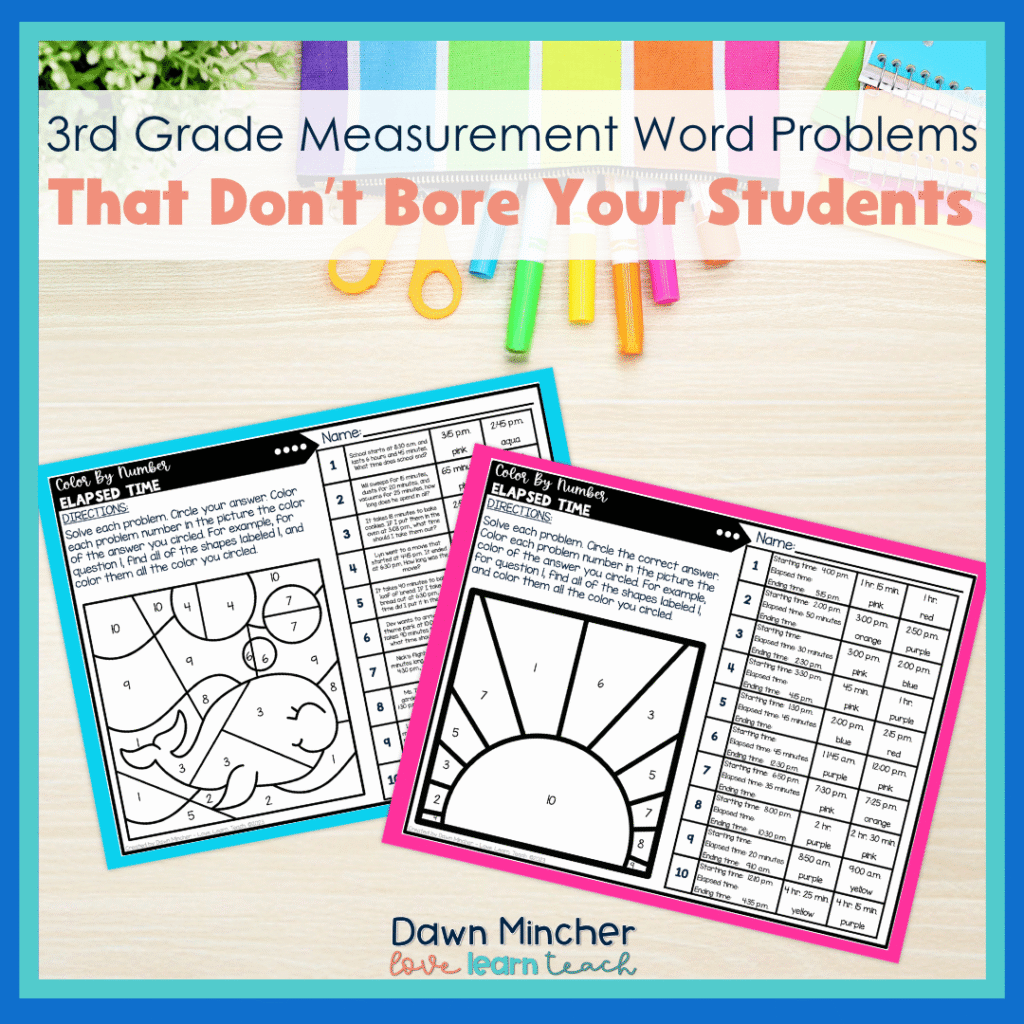
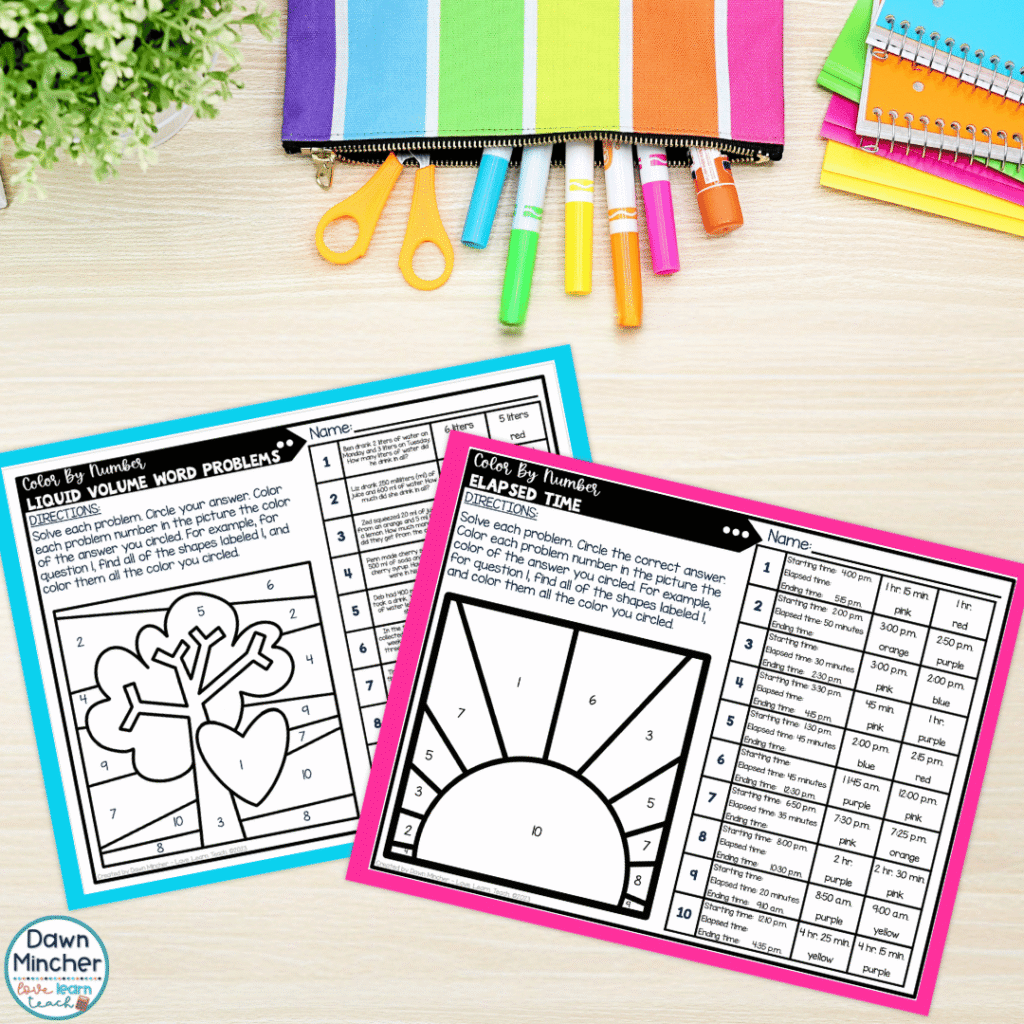
Work through a few problems together. Then, transition your students into independent or partner practice using my differentiated color-by-code measurement activity. This resource includes skills like elapsed time, liquid volume, mass, logical measurement, and measurement conversions. Each skill includes four different levels of difficulty. This makes it much easier to support all of your learners.
While your students work, pull a small group to provide extra support to your students who need help breaking down word problems. The color-by-code format keeps the rest of your class engaged and motivated while practicing important measurement skills.
Why Differentiation Matters During 3rd Grade Measurement Practice
Not every student approaches measurement word problems with the same level of confidence. That becomes very obvious during independent practice. Some of your students may still be working on understanding basic measurement vocabulary. Others are ready for multi-step problems involving conversions or elapsed time. Your students can struggle or become bored if not given the right level.
Differentiation also helps your students build confidence because they are more likely to experience success during practice. When your students feel overwhelmed, they often stop taking risks altogether. Giving your students measurement word problems that feel fittingly challenging encourages persistence. They will realize they are capable of solving these types of problems. That confidence starts carrying into other areas of math as well.
Using Measurement Word Problems During Math Centers and Partner Work
I quickly learned that teaching measurement word problems requires our students to have repeated practice. Rotating measurement practice through math centers, partner activities, and review games helps reinforce the same important skills. It also gives your students multiple chances to practice in a lower-pressure setting before tests or independent work.
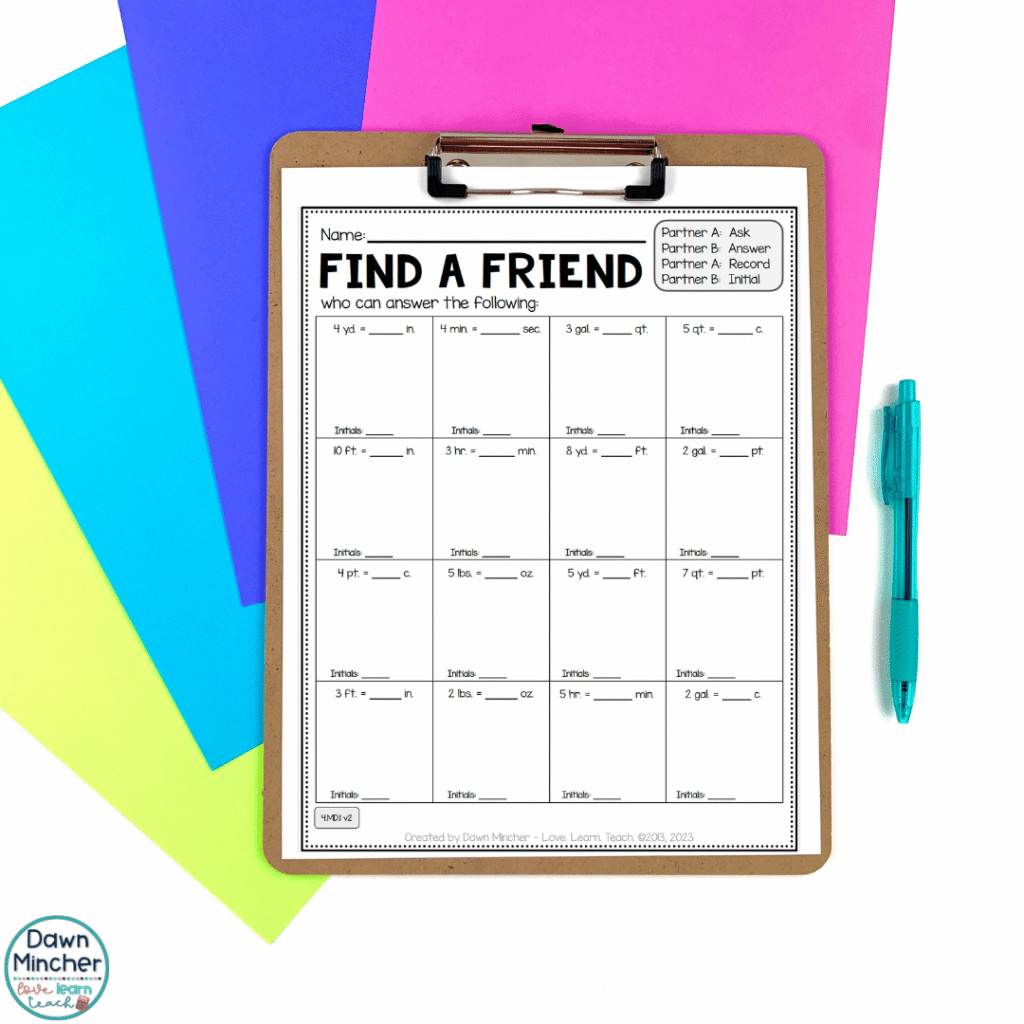
One of my favorite ways to make 3rd grade measurement review more interactive is through partner activities like Find a Friend. Instead of sitting quietly at their desks, your students move around the room. I recommend modeling the routine first with a student so everyone understands how the rotations work. Then your students pair up and solve a problem together. They discuss their reasoning, and rotate to a new partner after each turn. This helps your students verbalize their thinking while making measurement word problems feel less intimidating.
The structure also creates natural chances for your students to support one another during difficult problems. Throughout this activity, your students are asking questions. They are coaching on incorrect responses and recording answers. All of this is happening on repeat because they are switching partners.
That constant discussion can be incredibly helpful for your students who freeze during measurement word problems. They get to hear how other students are thinking through the math. Plus, your students stay much more engaged when movement and collaboration are involved.
Make Measurement Word Problems More Manageable for Your Students
If your students are shutting down during measurement word problems, having engaging and differentiated practice ready makes a huge difference. These measurement activities give your students practice with a variety of concepts without being repetitive or overwhelming.
If these resources sound like something your students would benefit from, grab my Color By Code measurement word problem activity and my Find a Friend review resource. Your 3rd grade measurement lessons will be more interactive and manageable. You can also explore more resources in my TpT store. You’ll find spiral review activities, review games, differentiated math practice, seasonal math resources, and more classroom-ready activities designed to support your students all year long.
Helping Students Build Confidence With Measurement Word Problems
Measurement word problems do not have to be part of the math class everyone dreads. Your students’ confidence will grow when given consistent modeling, chances to talk through their thinking, and engaging practice. They will be willing to slow down, problem solve, and trust themselves during 3rd grade measurement activities. Sometimes the biggest difference is not changing the math itself. It’s changing how supported your students feel as they work through it.
Save These Tips for Teaching 3rd Grade Measurement Word Problems
Teaching measurement word problems can lead your students to freeze the moment the math is in a paragraph. Save this post to your favorite math or upper elementary Pinterest board. This way, you will have this helpful information ready for your next 3rd grade measurement unit.