
As summer approaches, many of us start asking a similar question. How can we help our kiddos maintain their math skills without turning summer break into summer school? After spending an entire year building confidence and mastering new concepts, it can be discouraging to watch our learners return in the fall, having forgotten skills they seemed to know so well in May. If you are looking for summer review activities that help your students stay sharp, just know that effective review does not have to be complicated. A few minutes of practice each day can help your kiddos keep important concepts fresh while still leaving plenty of time for vacations, camps, swimming pools, and all the fun that summer brings.
Why Summer Review Activities Matter
Most of our students experience some level of learning loss during summer break. This is completely normal. When skills are not used regularly, they become harder to recall. Think about how long it takes to remember a password you have not used in months. Math skills work the same way.

As teachers, we often see the effects of this during the first few weeks of school. Our students may struggle to remember multiplication facts, forget fraction concepts, or need reminders about place value and problem-solving strategies. Before we can introduce new content, we often spend valuable instructional time reviewing material from the previous grade level.
Summer review activities help bridge that gap. Instead of allowing skills to disappear completely, our learners continue interacting with important concepts throughout the summer. The goal is not to teach brand-new standards. The goal is simply to keep previously learned skills active so our kiddos feel more confident when school starts again.
Confidence is an important piece of this conversation. Our students who have continued reviewing math during the summer often begin the school year feeling capable and prepared. That positive mindset can make a noticeable difference as they transition into a new grade level.
Why Summer Review Activities Work Better Than Large Summer Packets
When many people think about summer math review, they picture thick packets filled with pages and pages of work. While those packets are usually created with good intentions, they can feel overwhelming to both our students and their families. It is difficult to stay motivated when a task feels endless. That also makes it much easier to procrastinate on getting started.

Over the years, I have found that shorter review sessions tend to produce better results. Our students are much more likely to complete a small amount of work consistently than they are to tackle a large packet all at once. Consistency matters far more than quantity when it comes to retaining skills.
Imagine two of your students over the summer. One of them completes an hour of math review once every few weeks. The other spends five to ten minutes reviewing math each day. The second student will benefit more because they are repeatedly activating key concepts and strengthening long-term retention. Those small review sessions add up quickly over the course of the summer.
Short review activities are also easier for your families to incorporate into their routines. Your students can complete a quick set of math problems during breakfast, before screen time, while traveling, or as part of a daily summer schedule. Since the time commitment is manageable, there is often less resistance and fewer arguments about completing the work.
The Best Summer Review Activities Focus on Multiple Skills
Another common mistake we tend to make is focusing on only one skill during the summer. You might have a student who spends weeks practicing multiplication facts while never reviewing fractions, geometry, measurement, or word problems. While fluency practice is valuable, your students benefit most from reviewing a variety of concepts.

Think about how math works during the school year. Your students rarely spend an entire day solving only one type of problem. They encounter many different concepts throughout a week of instruction. Effective summer review activities should mirror that experience.
Mixed review helps your students maintain a broader range of skills. One day, they might solve a multiplication problem, review fractions, answer a geometry question, and complete a word problem. The next day, they encounter a different combination of concepts. This variety keeps your students thinking and helps prevent important skills from fading.
Your kiddos will also become stronger problem solvers when they must determine which strategy to use rather than assuming every problem requires the same process. Mixed reviews encourage flexibility and help your students make connections across math concepts.
Simple Summer Review Activities With Just Five Problems a Day
One of my favorite things about my summer review activities is their simplicity. Instead of assigning lengthy worksheets, your kiddos complete just five problems each day.
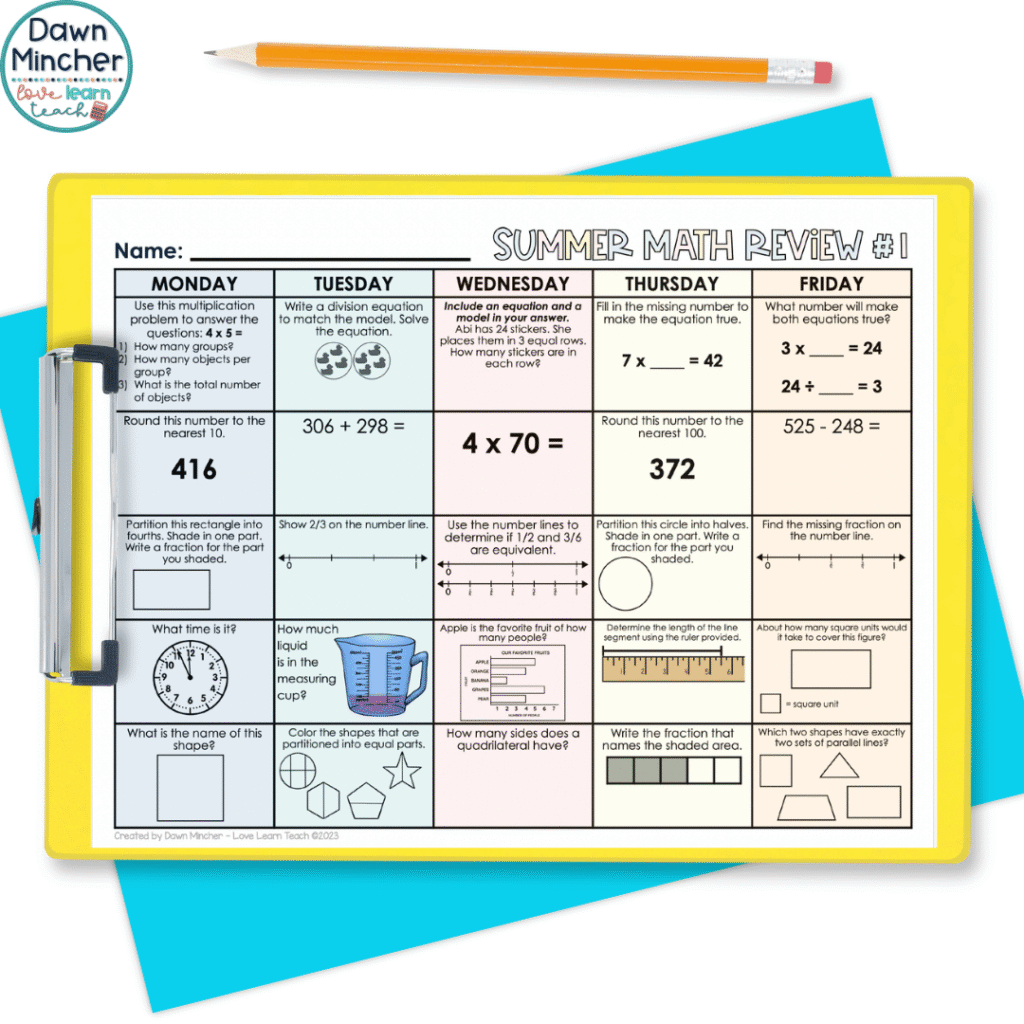
Five problems feel manageable. You’ll see how your kiddos are much more willing to complete a short review activity than they are to tackle pages of work. The assignment suddenly feels achievable for them. This increases the likelihood that they will stay consistent throughout the summer.
Each week includes five daily review sections with five math problems per day. This structure provides regular practice while keeping the workload reasonable. Your students receive enough spiral review to keep skills fresh without feeling like they are spending their summer completing schoolwork.
The short format also allows your kiddos to experience success quickly. Rather than becoming frustrated by a large amount of work, they can finish a column on their review page, feel accomplished, and move on with their day. Those positive experiences help build confidence and encourage them to continue practicing.
Your kiddos’ parents will appreciate this approach as well. Five problems can easily fit into a morning routine, tutoring session, or independent learning time. The review becomes a simple habit rather than a major event.
Tips for Implementing Summer Review Activities
One of the questions I hear most often is how to actually distribute and encourage completion of summer review activities. There truly is no single right way to use them. You can choose the approach that best fits your students, families, and school community.
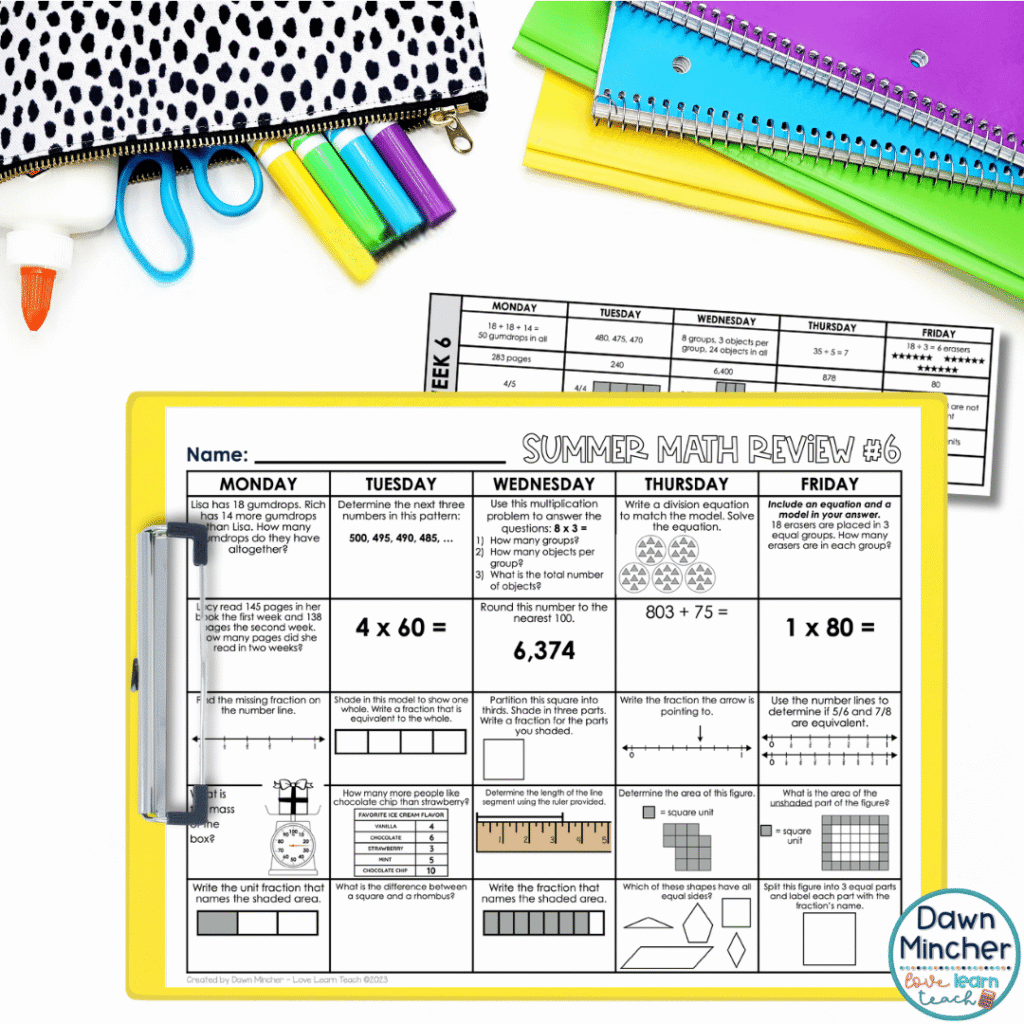
I usually sent the review work home during the final week of school, along with a letter explaining its purpose. This allowed my families to see the format before summer began. Since each day includes just five problems, my parents often appreciated knowing that the review could be completed in only a few minutes a day rather than requiring long work sessions.
You can choose to create an incentive for your students who return completed review packets in the fall. This could be as simple as a certificate, extra recess time, a small prize, or recognition during the first week of school. Students are often more motivated when they know their hard work will be celebrated. I do recommend being transparent about the incentives in your letter, so your students know that you’ll be collecting the completed work and what they’ll be working towards.
How These Summer Review Activities Are Organized
I designed my summer review activities to make life easier for you, whether you are a teacher, parent, or both. The resources include 12 weeks of review that can be used throughout the summer. You can even save to kick-off your review at the beginning of a new school year. I also made sure to include answer keys to make it easier for you and your families to provide feedback.
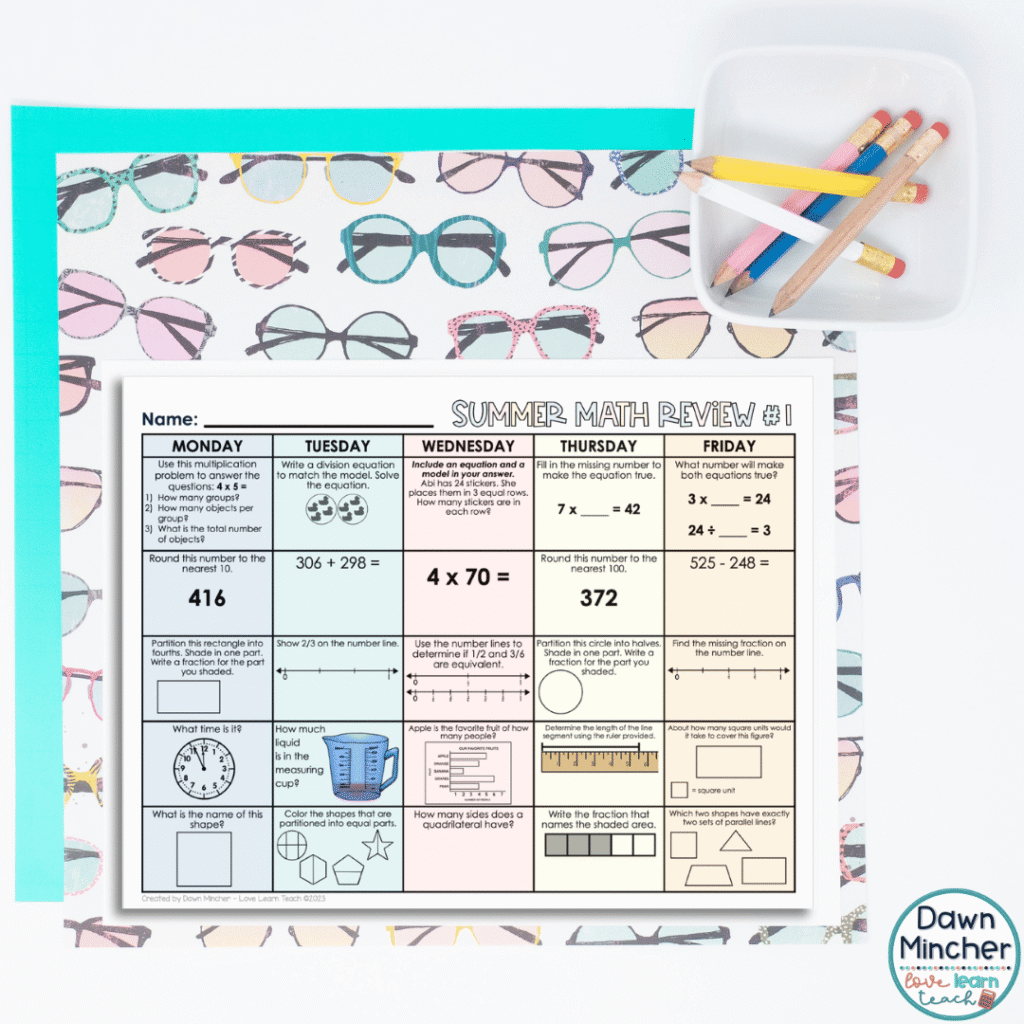
Each week is divided into five daily sections. Every day contains five review problems covering a variety of grade-level concepts. Your students will continually revisit previously learned skills rather than focusing on a single topic for an extended period. The spiral review format provides your students with repeated practice without becoming bored by repetitive activities.
The structure helps your students to know exactly what to expect. Once they understand the format, they can focus their energy on solving problems rather than learning new directions. This predictability is especially helpful during the summer when they are most likely working more independently.
Summer Review Activities Help Our Students Start the School Year Strong
Summer should absolutely be filled with fun, relaxation, and memorable experiences. Your kiddos deserve a break after working hard throughout the school year. At the same time, a small amount of consistent review can make an impact when August arrives.
The best summer review activities are not necessarily the longest or most challenging. They are the ones your students will actually complete consistently. When they spend a few minutes each day revisiting important concepts, they can reduce the effects of summer slide while building confidence for the year ahead.
With just five problems a day, your students will keep essential math skills fresh. They’ll maintain momentum and begin their next school year feeling ready to learn. That is a win for your kiddos, their families, and you alike!
Supporting Rising 4th, 5th, & 6th Grade Students
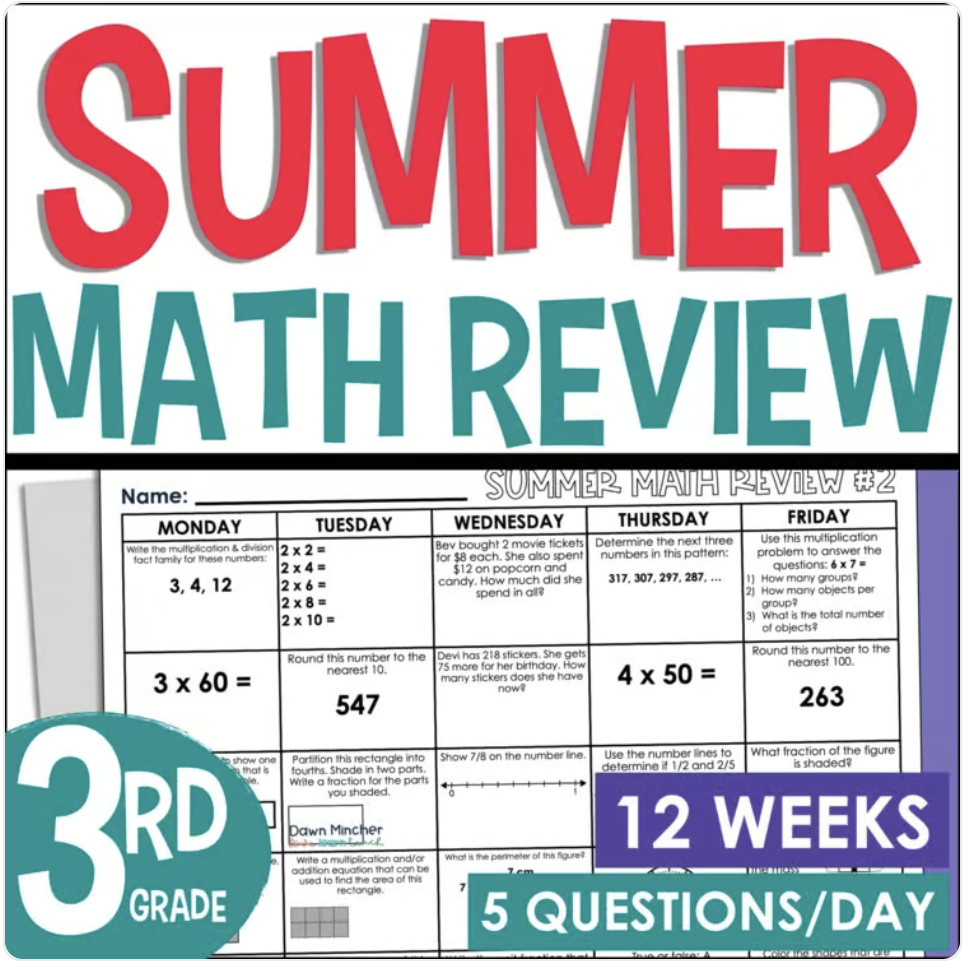
If you have students heading into 4th grade, my 3rd Grade Summer Math Review resource helps them continue practicing the skills they learned all year. Throughout the 12 weeks of review, students revisit multiplication and division, place value, fractions, measurement, data interpretation, area and perimeter, geometry, and algebraic thinking.
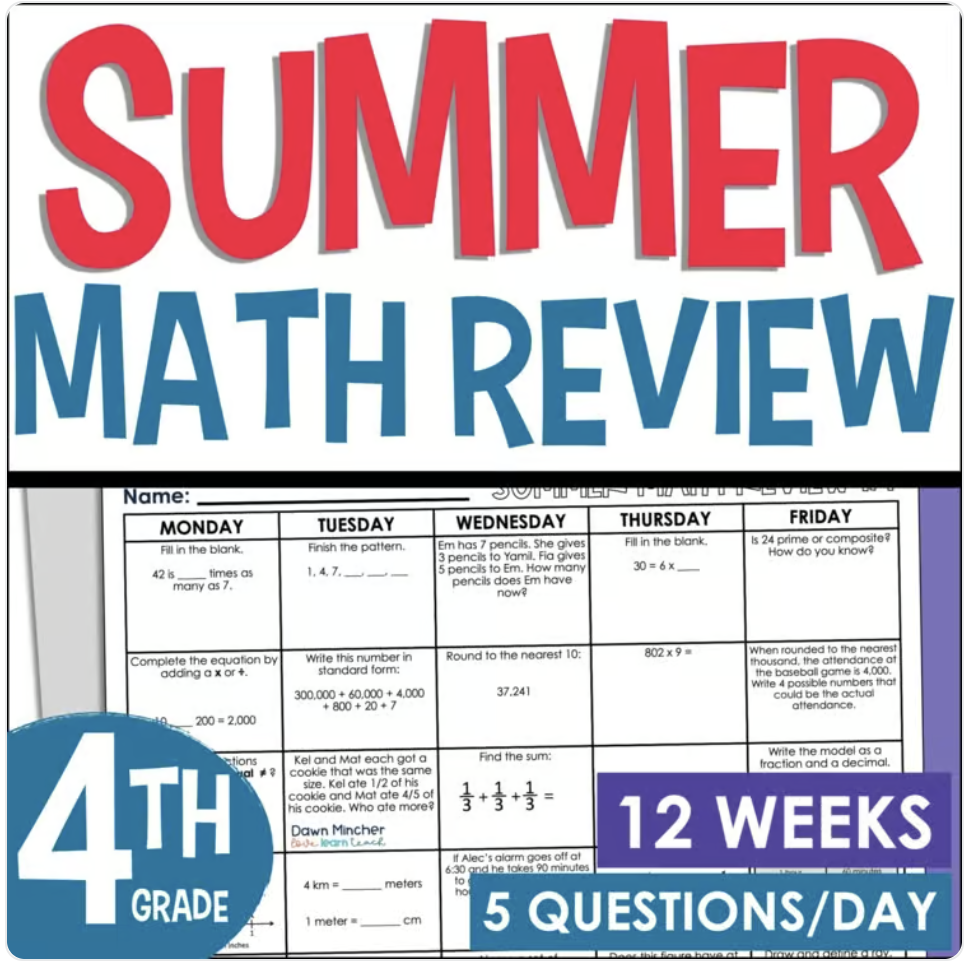
My 4th Grade Summer Math Review resource is designed for your students entering 5th grade. Your students will continue reviewing multi-digit computation, fractions, decimals, measurement conversions, area and perimeter, angles, coordinate grids, symmetry, and geometry concepts.
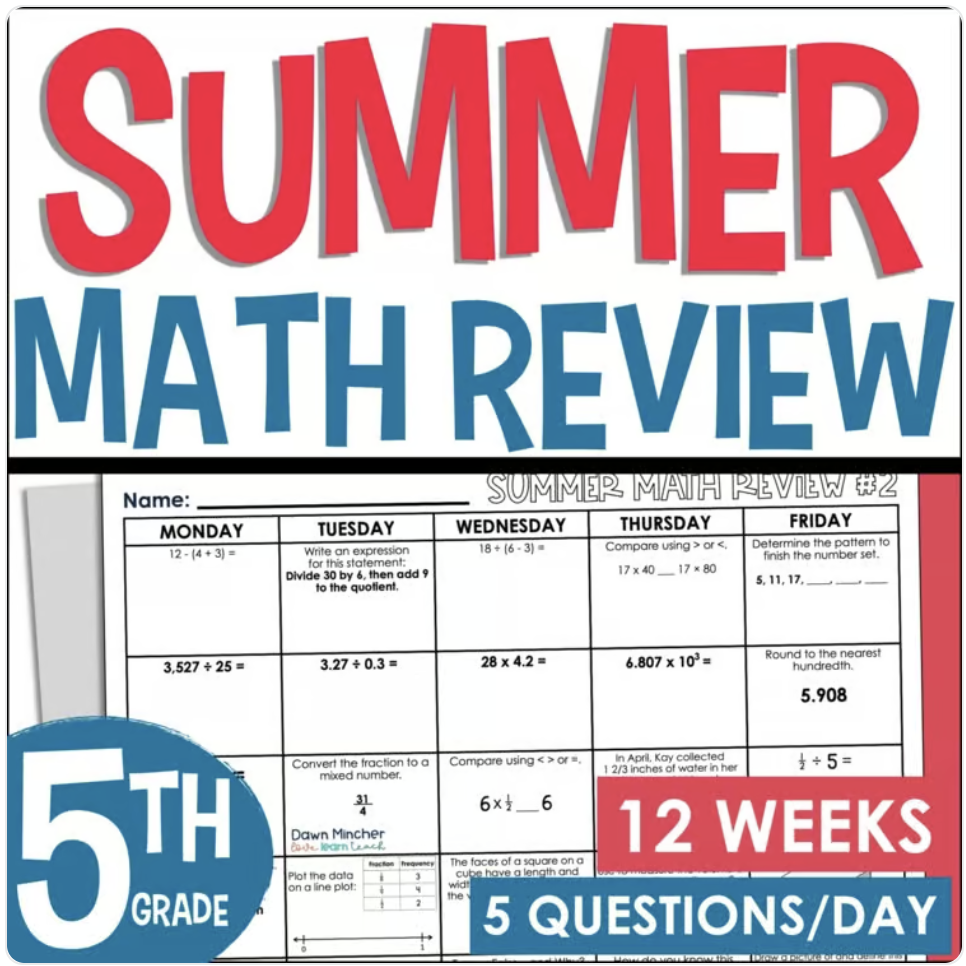
Your students entering 6th grade can use my 5th Grade Summer Math Review resource to keep important upper elementary math skills fresh. The review includes decimal operations, fractions, coordinate planes, volume, measurement conversions, numerical expressions, geometry, and problem-solving practice.
Looking for Summer Review Activities Your Students Will Actually Complete?
If you would like to see how this style of review works before committing to a full resource, be sure to grab my free summer math preview pack. It provides an opportunity to explore the format, see how the review pages are organized, and determine whether this approach is a good fit for your students.
The preview pack gives you a chance to experience the benefits of short, consistent reviews. You might be a teacher preparing summer packets. A tutor supporting your students between grade levels. A parent looking for meaningful summer review activities. My free preview pack offers you an easy place to start.
Once you have had a chance to try the format, visit my TPT store for my complete collection of summer review activities, spiral review resources, task cards, math games, and differentiated practice materials. I designed these resources to help your students maintain skills while saving you and families valuable planning time.
Save for Later
Save this post to your favorite math Pinterest board so you can quickly find these summer review activities to share with your students and their families! Whether you are planning for summer break or preparing for back-to-school season, these will help your students start the new school year feeling confident and prepared.