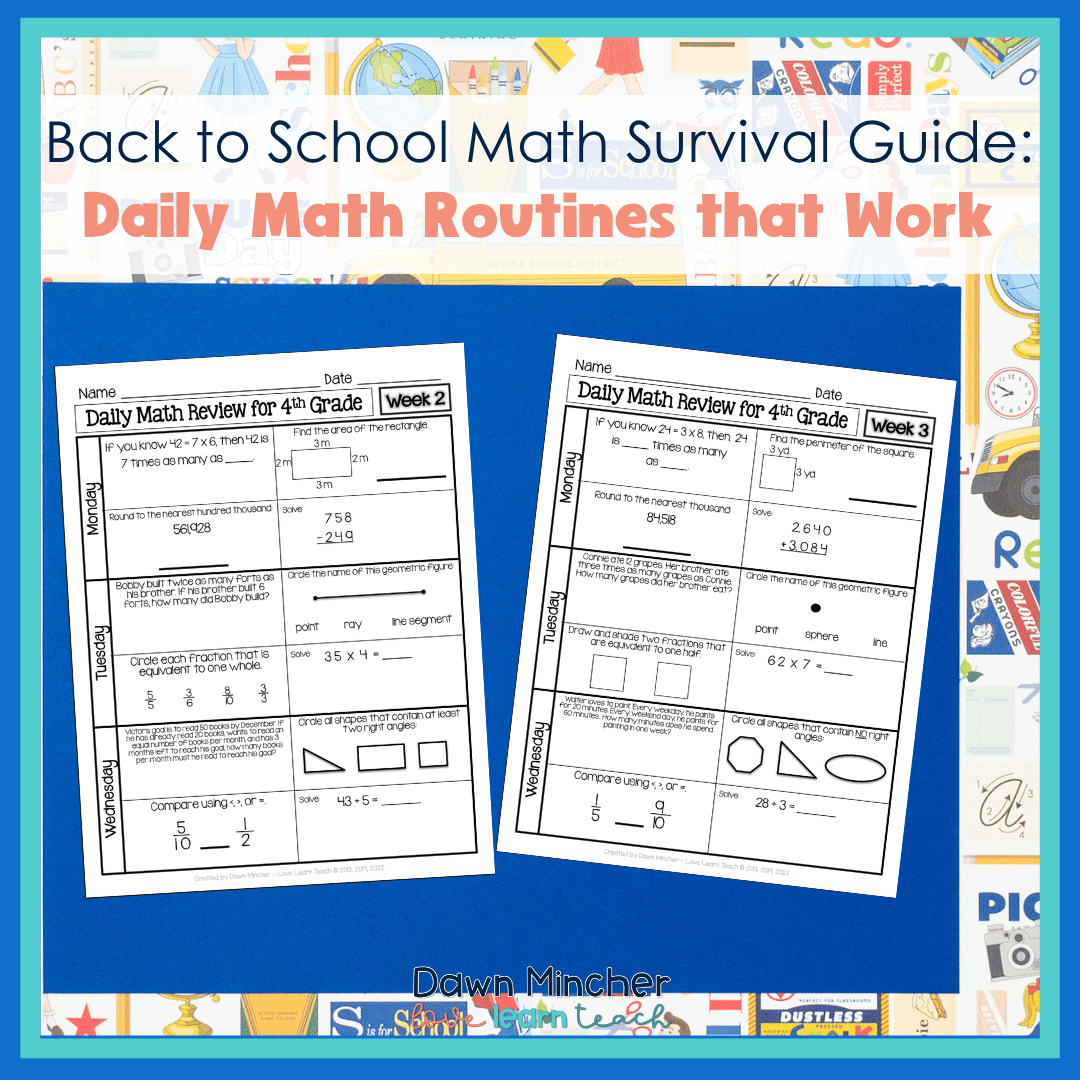

If you teach math, you know how important it is to review math skills. There’s no such thing as teach it once and move on if you want students to master the skills. But with the pressure of the scope & sequence, adding review to the mix becomes one more thing on an already full plate. Between planning lessons, pulling small groups, and trying to meet every student where they were, fitting in meaningful review often felt overwhelming.
The problem isn’t that the skills review isn’t important; it is figuring out how to review math skills consistently without creating extra prep, copying, or decision fatigue. Over time, I learned that the key wasn’t doing more. It was choosing tools that worked harder behind the scenes, so I didn’t have to.
Why Reviewing Math Skills Needs to Be Flexible, Not Complicated

When we review math skills, it’s easy to fall into the trap of using the same whole-class worksheet for everyone. While that approach feels efficient on the surface, it rarely meets the needs of all of our learners. Some of our students breeze through the work while others struggle. Honestly, neither group truly benefits from the experience. Reviewing math skills works best when it’s flexible enough to target specific gaps without disrupting the rest of your day.
In my classroom, I found that the most effective review happened when my students practiced exactly the skills they needed, not a random mix pulled from a pacing guide. That meant the review had to be easy to customize without requiring me to create multiple versions of the same assignment. When reviewing math skills could adapt to different learners using the same basic structure, it became something I could use daily instead of waiting to use it during extra time that rarely appeared.
This is where a mix-and-match approach made a noticeable difference. Instead of planning new review activities every week, I could pull targeted math practice pages and pair them with a consistent format my students already understood. Reviewing math skills stopped feeling like an interruption and became a natural extension of instruction.
How a Mix & Match System Helps You Review Math Skills Intentionally

When I talk about reviewing math skills intentionally in my classroom, I’m really talking about being able to choose the exact skill my students needed and pairing it with a structure that didn’t change. That is the foundation of my Mix & Match Color by Number Math Review resource. Instead of starting with an activity and hoping it fits, this system starts with the math concept. I chose the skill first, then paired it with a coloring page, knowing the routine would stay familiar for my students.
Each math practice page in my resource focuses on one specific skill and includes eight problems. The color directions are printed directly on the math page. This means there is no separate answer key or color code for your students to manage. As your students solve each problem, their answers tell them which number to color and which color to use on the picture. Every coloring page is labeled with numbers one through eight. Those numbers appear multiple times throughout the image.
What makes this approach so powerful is that every math page works with every coloring page. The same picture can be reused over and over, but it looks different each time, depending on the math skill your students are practicing. That meant I could review math skills through spiral review when needed, or intentionally when pulling a very specific concept for my individual students or groups, without changing the structure or adding extra prep.
Reviewing Math Skills Through Independent Work and Centers

One of the most consistent ways I used this resource to review math skills was during independent work and math centers. I would place a stack of math practice pages at one station and a selection of coloring pages at another. Students started by completing their math page. Then, they could choose a coloring page once they were ready to apply their answers. The process remained the same every time, allowing my students to work independently with confidence.
Since the math page drove the coloring, my students stayed focused on accuracy. If an answer was incorrect, it showed up immediately in the picture. This natural feedback encouraged my kiddos to slow down and check their work without me having to prompt them. For my early finishers, the coloring piece gave them a meaningful way to stay engaged without needing a separate task.
This setup also made differentiation manageable. While the center structure stayed the same, the math pages could change based on my students’ needs. Some of my students reviewed place value, while others practiced multiplication or division. Everyone was reviewing math skills, but at a level that made sense for them.
Reviewing Math Skills During Morning Work or Spiral Review

Morning work was one of the easiest places to review math skills using this resource, and it is actually built into the directions. I designed the Mix & Match pages to work as math warm-ups or a spiral review. This makes them a natural fit for the start of the day. My students came in, picked up a math page, and got started right away because they already knew the routine.
Sometimes I used morning work as a spiral review, rotating through different skills during the week. Other times, I intentionally chose a specific concept I knew my students needed more practice with. The flexibility allowed me to respond to what I was seeing in class without changing the structure of the activity.
Since the task combined problem-solving with a calming, creative component, morning work felt focused rather than rushed. Reviewing math skills at the start of the day set a positive tone for the rest of our school day. It also gave me time to handle attendance and check-ins while my students worked independently.
Reviewing Math Skills Through Partner Practice and Small Groups

Partner practice was another flexible way I used this resource to review math skills. It transitioned seamlessly into small group instruction. Sometimes partners worked through one math practice page together, talking through each problem before moving on to color their own pictures. Other times, each student solved the math page independently, then compared answers with their partner before coloring. In both cases, the math page guided the work, and the coloring reinforced accuracy.
This same structure worked just as well in small groups. When I met with a group, I could give everyone the same math practice page and let students choose different coloring pages, or I could do the opposite. Sometimes the entire group colored the same picture while I had each student solve a different math page based on their needs. That flexibility made it easy to review math skills in mixed-ability groups without calling attention to differences.
Since the directions stayed consistent, my students didn’t need extra explanation when we shifted from partner work to small groups. They already understood the process. Reviewing math skills in this way encouraged discussion and built in error-checking. My personal favorite part was that it allowed me to focus on listening to student thinking instead of managing materials. The resource supported collaboration while still keeping each of my students accountable for their own learning.
Get Free Mix & Match Pages to Review Math Skills

I know just how effective these math review activities are. I also know just how much time they will save you as you help each student move to the next level. That’s why I want you to try them for free. These free Mix and Match Math review pages are designed to give you a clear sense of how these pages work in your classroom.
You’ll be able to see how the math practice pages pair with the coloring pages, how the directions are laid out for your students, and how easy it is to pull different skills without changing the routine. Whether you’re using them for morning work, centers, or small group review, the goal is to help you review math skills in a way that feels manageable, flexible, and sustainable.
If you’re ready to try it out, grab my free Mix & Match math review practice pages. Once you do, you can print and use them right away. These pages are perfect for reviewing math skills and help to give you a practical starting point without any extra prep.
Review Math Skills Without Adding to Your Plate
If reviewing math skills has felt like one more thing to juggle, this approach offers a way to simplify without sacrificing quality. By using a consistent structure and intentionally choosing the skills your students need most, math review becomes easier to implement and more meaningful for everyone involved. You’re not creating more work or reinventing your routine. You’re using tools that allow you to review math skills in a way that fits naturally into what you’re already doing. It’s not about doing more. It’s about making the work you’re already doing count.
Grab the Mix & Match Math Review and have everything you need for a year of differentiated math skills review.

Save for Later
Pin this to your favorite math Pinterest board so you can quickly come back when you need a fun and effective math skills review activity for your classroom.