The first week of school always seems to fly by. Between teaching classroom procedures, learning names, organizing supplies, and answering a hundred questions, it can feel impossible to establish meaningful academic routines. While all of this is going on, many of our students are walking in with summer learning loss, different experiences, and varying levels of confidence in math. If you’ve ever wondered how to begin reviewing math skills without overwhelming your students, a daily math spiral review routine is one of the best places to start.
Instead of diving straight into new content, the math spiral review gives your students short, consistent opportunities to revisit important skills over time. It also helps establish classroom routines that will support your math instruction all year long. Today, I’m sharing how I recommend setting up a successful math spiral review routine during the first week of school.
Why Start Math Spiral Review During the First Week?

The first week of school is all about building habits. Every routine you introduce during those first few days becomes easier to maintain throughout the rest of the year. That is exactly why I loved introducing math spiral review immediately instead of waiting until later in the month.
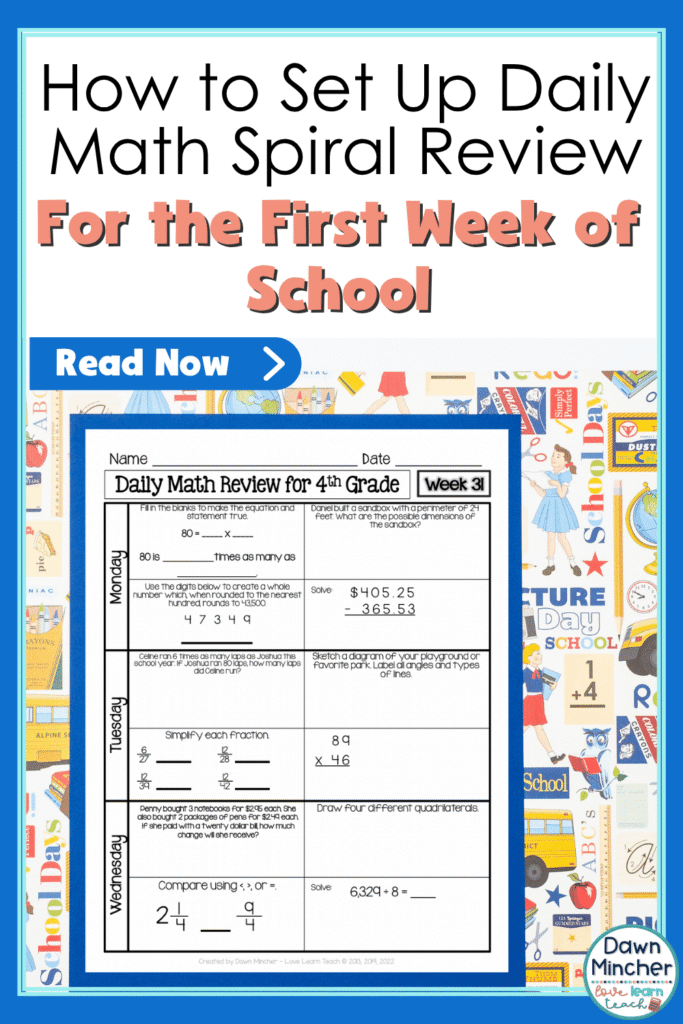
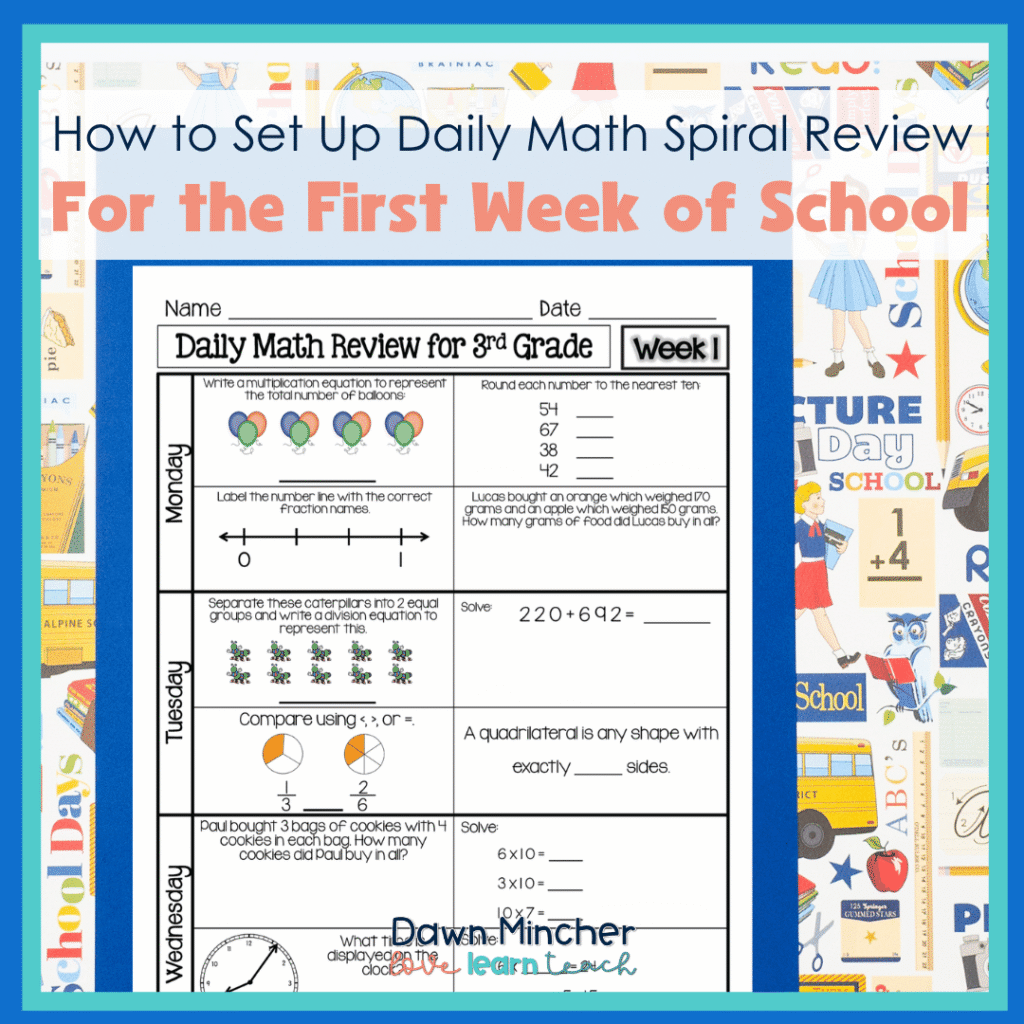
A daily math spiral review gives your students predictable practice without feeling overwhelming. Rather than completing an entire worksheet on one topic, your students work through a small collection of mixed-review problems that revisit different math skills over the course of the week. The weekly format also means your students can keep the same paper all week instead of managing a new page every day. I designed my resources as one double-sided sheet that provides daily practice from Monday through Friday.
Beginning with this routine right away also gives you valuable information as the teacher. As your students work, you’ll quickly notice which concepts they remember well and which skills may need additional review. Those observations become helpful as you begin planning your first math lessons.
Prepare Your Math Spiral Review Routine Before Your Students Arrive
One of the best things you can do before the first day of school is prepare your math spiral review routine ahead of time. Having everything ready allows you to focus on teaching procedures instead of searching for copies or explaining directions while your students wait.
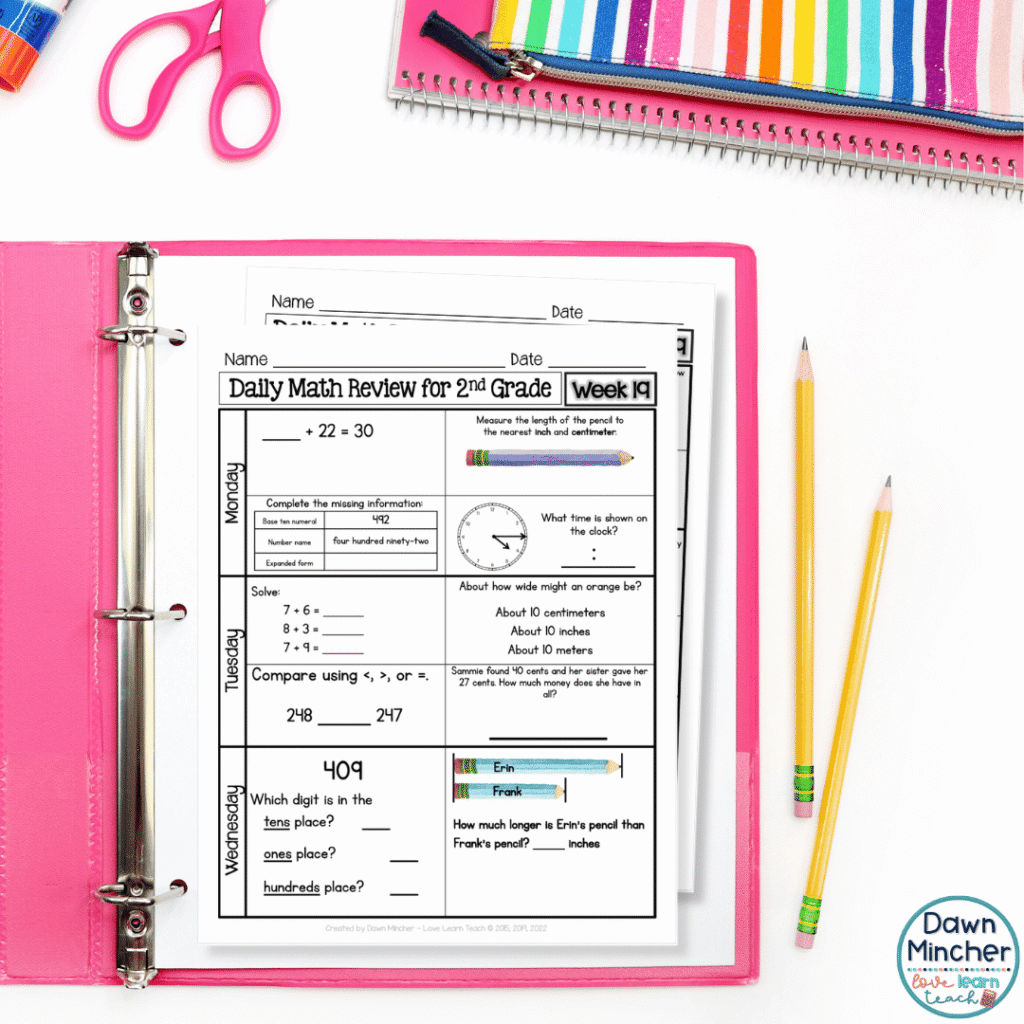
Start by copying one week’s worth of pages front to back so each student receives a single paper that will last all week. These resources are designed specifically for that format, making organization simple for both you and your students. Before school begins, decide where your students will store their weekly pages. That could be inside a math folder, binder, or homework folder.
Next, decide exactly when you want your math spiral review to happen each day. I know many teachers love using spiral review as morning work while their students are settling into the classroom. Others prefer beginning math class with a spiral review as a warm-up before introducing the day’s lesson. Spiral review practice will also work during learning stations, as homework later in the year, or as review before assessments. This gives you flexibility as your classroom routines develop.
Take time to think through your expectations before your students ever walk through the door. Will your students immediately begin working when they arrive? Will they use only a pencil? Should they skip difficult questions and come back later? Will they check answers with a partner or review them together as a class? The fewer decisions you have to make in the moment, the smoother your routine will become.
Model Math Spiral Review with Think-Alouds
One common mistake we sometimes make is handing our students a review page and expecting them to know exactly what to do. During the first week of school, your goal is not to see how independently your students can work. Your goal is to teach the routine.

On Monday, project the math spiral review page or display it where everyone can see it. Walk your students through the layout before solving anything. Point out that each day has just a few review problems that cover different math skills, rather than one large assignment. Explain that the purpose is to revisit previously learned concepts a little at a time while building confidence for the year. The pages intentionally include a variety of skill types across the week, depending on grade level.
Then begin modeling your thinking aloud. Instead of simply solving a problem, let your students hear what is happening in your mind. You might say, “The first thing I’m going to do is carefully read what this question is asking. I notice this is measuring, so I’m going to grab my ruler before I begin.” Or, “I’m not completely sure about this one yet, so I’m going to circle it and come back after I finish the other problems.”
Your students also need to hear that it is perfectly okay not to remember every skill after summer break. Tell them that this is a review, not a race. Encourage them to try every problem, use strategies they already know, and ask questions during the discussion afterward. Ultimately, they just have to try something. That simple message helps create a classroom where mistakes become part of learning instead of something your students fear. I frequently told my own students that mistakes were proof that they were trying.
What the First Week of Math Spiral Review Can Look Like

The first week is all about gradually releasing responsibility. On Monday, spend plenty of time teaching the routine. Complete one problem together and explain your expectations. Then, allow your students to finish the remaining problems while you circulate around the room.
Tuesday is a great time to briefly review the expectations before beginning. You may choose to model one new problem type before your students work independently. Continue reminding them that the goal is thoughtful effort, not finishing as quickly as possible.
By Wednesday and Thursday, your students will begin feeling much more comfortable with the routine. Rather than spending your time giving directions, you’ll find yourself walking around the classroom, observing student thinking, answering questions, and making mental notes about common misconceptions.
By Friday, the routine already feels familiar. Your students know where to find their paper, how to begin working, and what happens when work time ends. That consistency becomes the foundation for the rest of the school year.
How Long Should Math Spiral Review Take Each Day?
One reason many of you will love math spiral review is that it fits naturally into a busy schedule. Since your students complete only one day’s section at a time, the routine stays manageable while still providing meaningful practice. The review doesn’t take over the entire instructional time.

Allow your students a reasonable amount of uninterrupted work time before discussing answers together. During the first week, some classes may need a little longer simply because they are learning the routine. As your students become familiar with expectations, the process naturally becomes more efficient. Spiral review problems should just take about 5 – 10 minutes of work time before reviewing answers as a class.
While your students are working, avoid sitting at your desk. Instead, circulate around the room. Notice which problems your students are solving confidently and where they hesitate. Those quick observations often tell you more than a formal assessment and help you decide what deserves extra attention during upcoming lessons.
Make Reviewing Answers Part of the Learning
The discussion after the math spiral review is just as valuable as the independent work. Instead of simply reading the correct answers aloud, turn your answer review into a conversation that focuses on showing math thinking and using math talk.

Ask your students to explain how they solved a problem. Invite another student to share a different strategy if one exists. When appropriate, discuss common mistakes before revealing the correct answer. These conversations help your students realize there are often multiple ways to approach a problem while strengthening their math reasoning.
This is also the perfect opportunity to normalize mistakes. If several of your students missed the same question, reassure them that it simply tells you what your class will continue practicing together. Your students will quickly learn that math spiral review is designed to help them grow, not to catch them making mistakes.
Troubleshooting Your Math Spiral Review Routine
Every classroom is different, and you may have a few questions during those first few days. If your students finish early, encourage them to quietly check their work before reading independently or beginning another classroom task. If your students arrive at different times each morning, a consistent math spiral review routine allows late arrivals to settle in without interrupting your instruction.

You may also wonder whether every page should be graded. You’ll find that reviewing answers together provides enough feedback while allowing your students to immediately correct misconceptions. You might choose to collect pages occasionally to monitor progress. Either approach can work as long as your students receive feedback on their thinking.
Remember that your students will not become independent overnight. The first week is about teaching expectations, practicing procedures, and building confidence. Each day will require a little less guidance than the day before. Before long, your students will walk in, grab their weekly page, and begin working without needing reminders.
Math Spiral Review Resources to Check Out
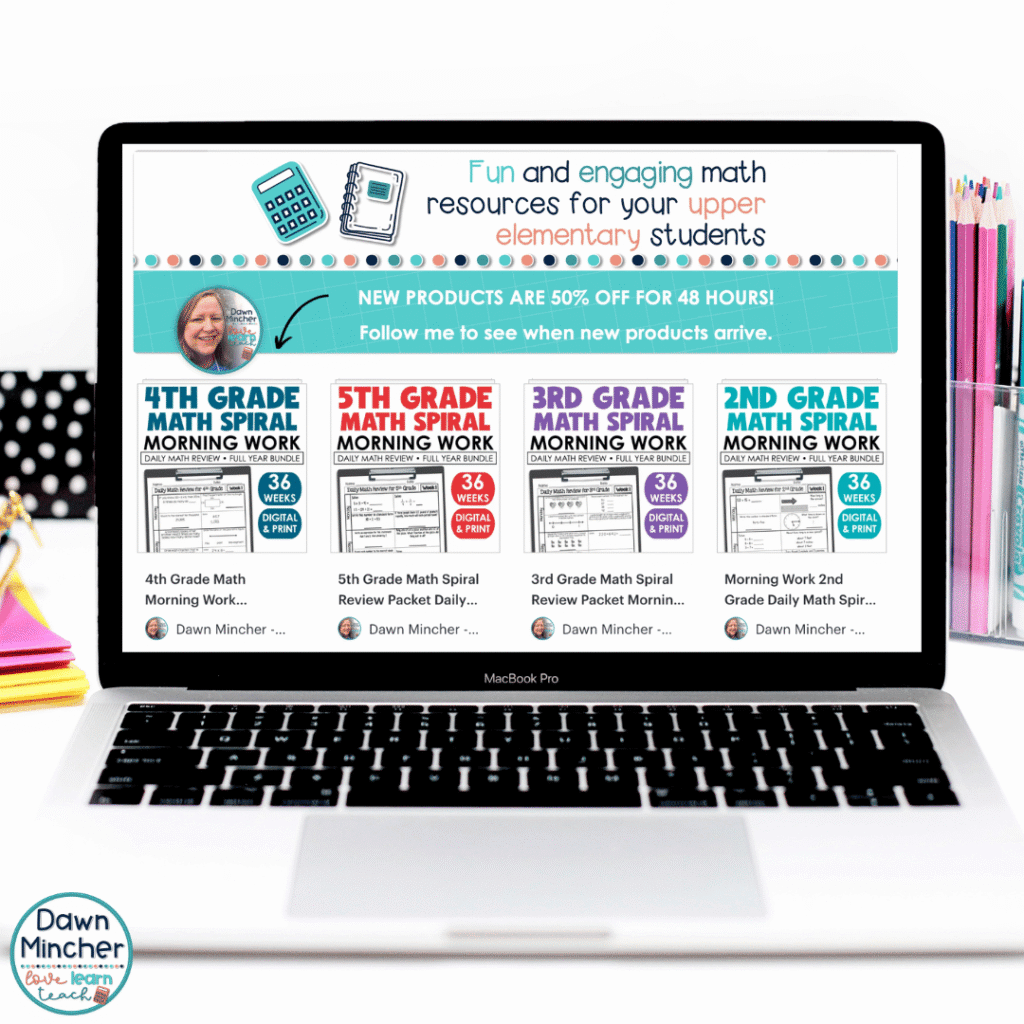
If you’re looking for an easy way to establish meaningful math routines from the very first week of school, be sure to explore my collection of spiral review resources for 2nd, 3rd, 4th, and 5th grade. To test out the format before fully diving in, check out these free math spiral review pages. They’ll make it easy to try the routine with your own students before choosing the resource that best fits your classroom.
A Small Routine That Makes a Big Difference
Establishing a math spiral review routine during the first week of school is an investment that pays off all year long. While it may take a few days to teach expectations and model the process, the consistency will become second nature for your students. Your students will have regular opportunities to revisit previously learned skills rather than practicing them only once and moving on. Those few minutes of daily review help build confidence, strengthen long-term retention, and encourage your students to think more deeply about math.
Save for Later
Getting classroom routines established during the first week can make the rest of the school year run so much more smoothly. Save this post to your favorite teaching or math Pinterest board so you’ll have these math spiral review tips ready when you’re planning lessons or helping another teacher build their math routine.