December is one of those months when keeping your students focused can feel challenging! Between holiday excitement, special activities, schedule changes, and winter break getting closer, even your most dependable classroom routines can start to feel a little chaotic. You still have important math skills to teach and review, but you also want your students to enjoy the season. The good news is that December math doesn’t have to mean choosing between meaningful learning and holiday fun. With a few familiar routines and engaging activities, you can keep your students practicing important math skills without spending hours planning something new every day.
Keep December Math Routines Consistent with Spiral Review
One of the easiest ways to manage December math is to stick with routines your students already know. When the school day is filled with holiday activities and unexpected schedule changes, having something predictable can make a big difference. Your students will know what to expect, and you don’t have to spend extra time explaining a new activity every morning. That’s why I love using spiral review as part of a daily math routine.
Build a Predictable Daily Math Routine
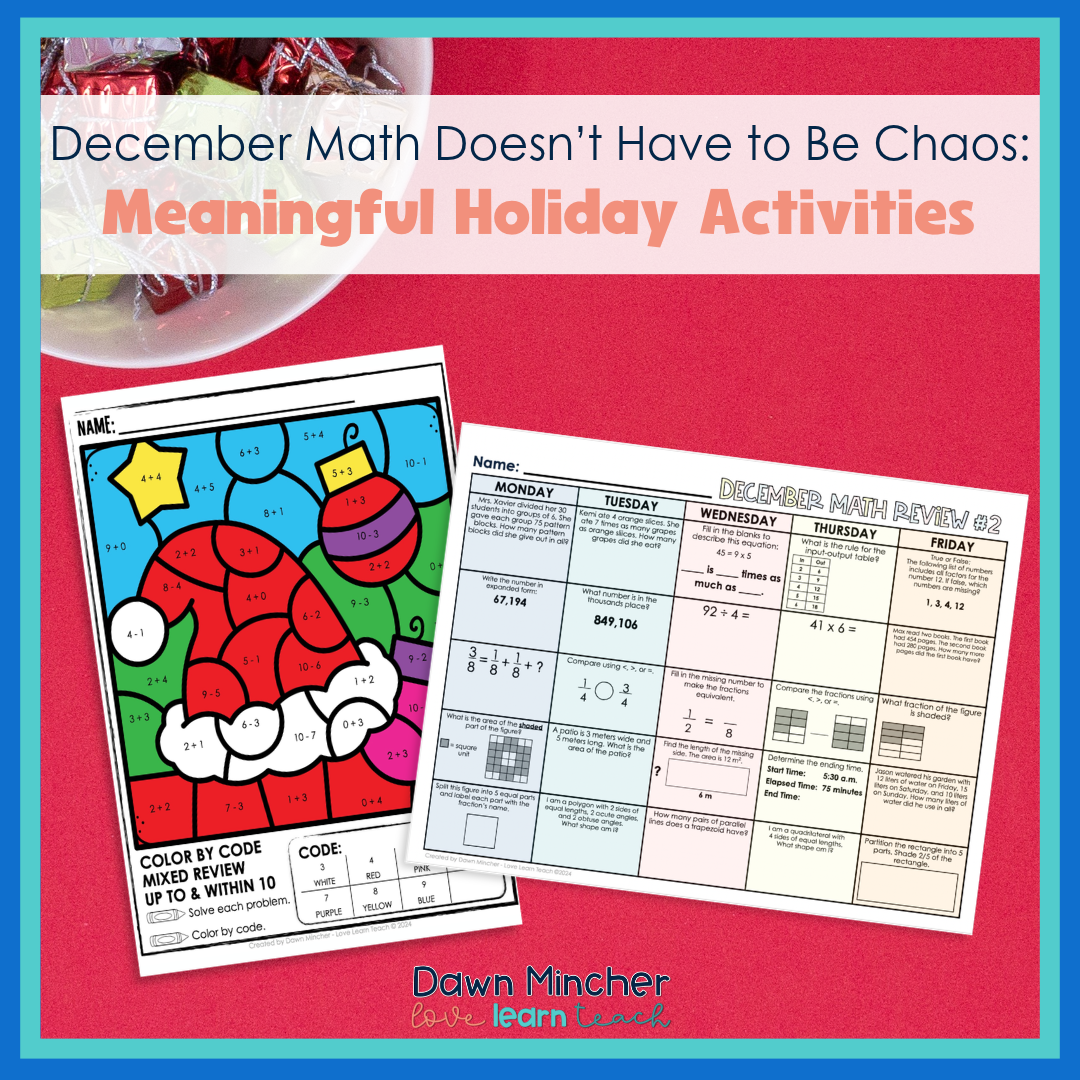
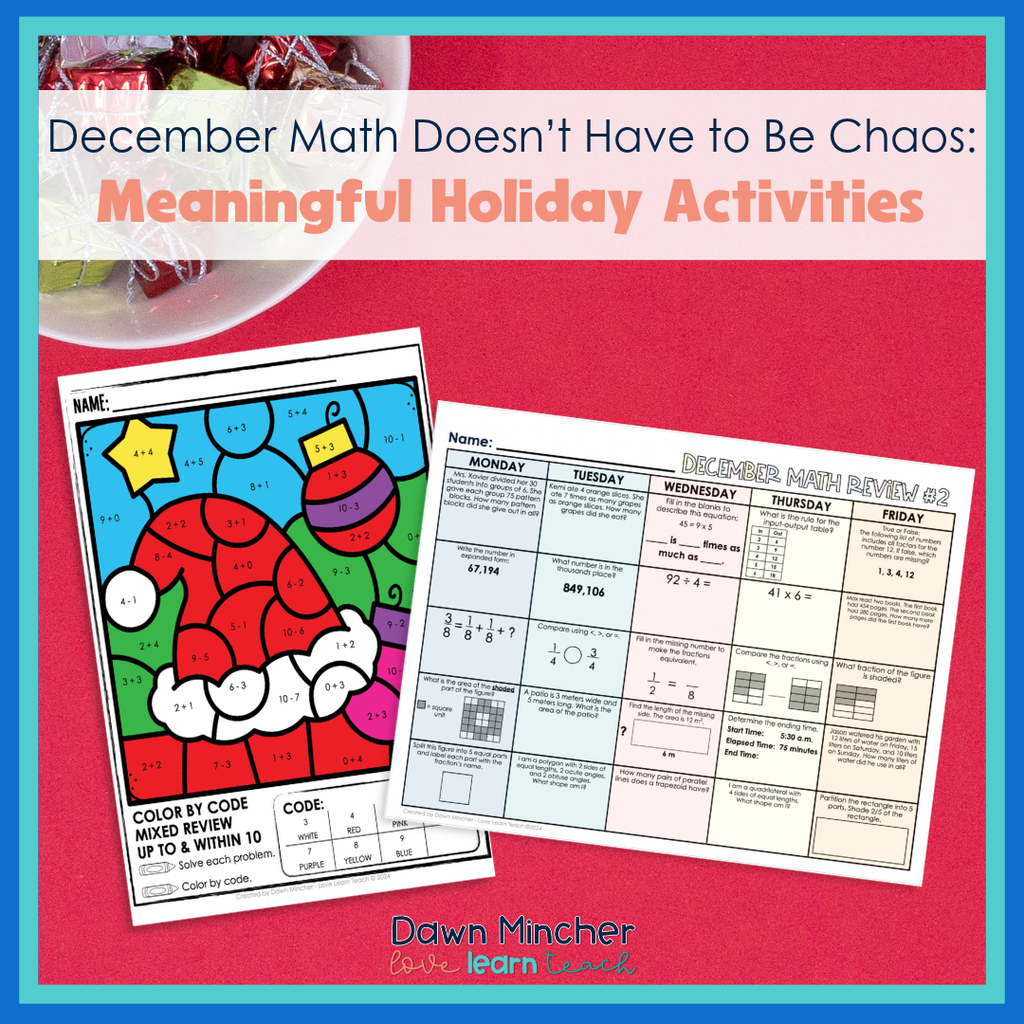
My December 4th Grade Math Spiral Morning Work includes four weeks of practice with five questions each day. Your students will review previously learned skills while continuing to build their understanding of newer concepts. The questions cover a variety of math skills, including number operations, fractions, measurement, and geometry. Instead of spending an entire lesson reviewing one concept, your students can revisit several skills throughout the week.
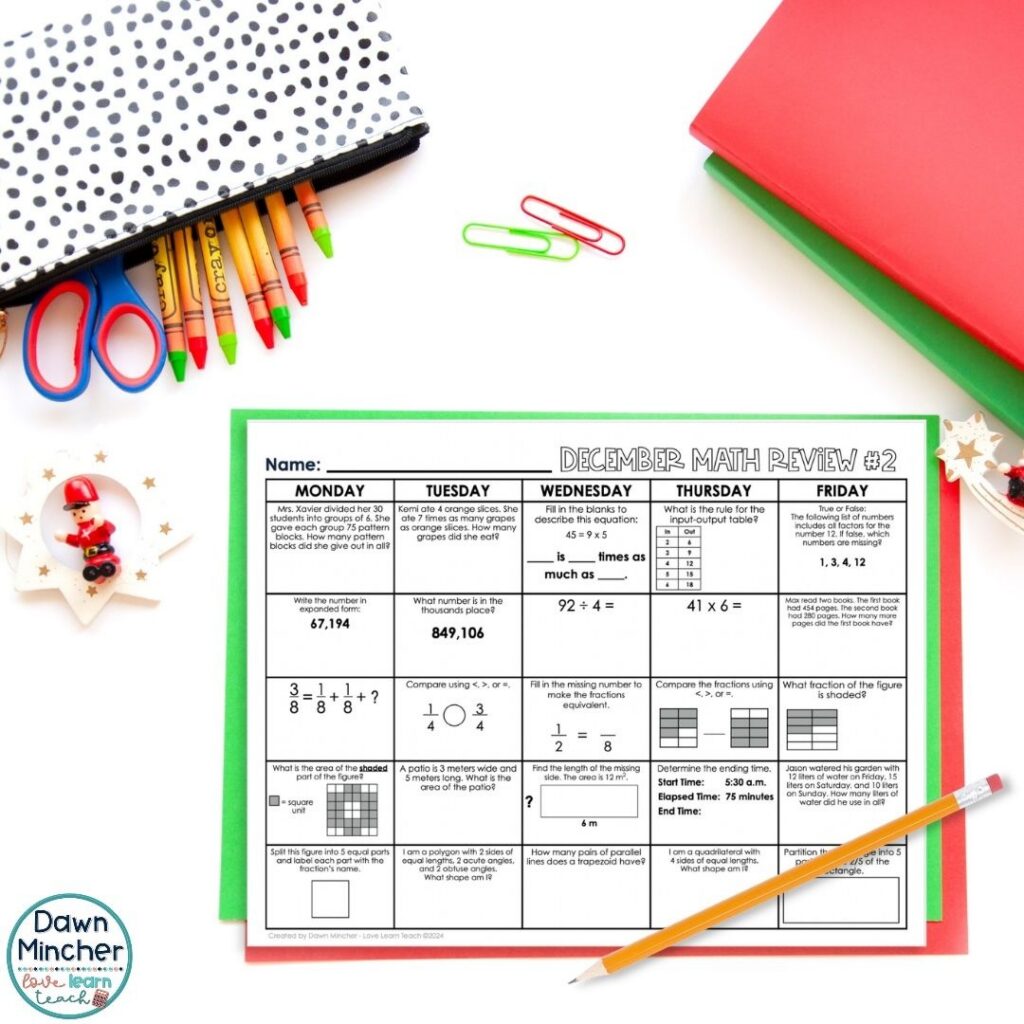
I recommend having your students begin their spiral review as soon as they settle into the classroom. You might give them the first five to ten minutes of the day to work independently before reviewing a few questions together. This creates a predictable start to the day, even when the rest of the schedule looks a little different. Your students can get started without waiting for directions, and you have a few minutes to take attendance or prepare for the next lesson.
Another way to use December math spiral review is during the first few minutes of your math block. This works especially well if your morning schedule is already packed with other activities. You can also project the questions for your students to complete in their notebooks or use the printable pages. I included color and black-and-white options, along with different page headings, so you can choose what works best for your classroom.
Use December Math Review to Guide Instruction

Spiral review isn’t just about giving your students a few problems to solve each day. It’s also an opportunity to see which skills your students remember and which ones need a little more attention. During your daily review, ask your students to explain how they solved a problem or share a different strategy. These quick conversations can help you recognize misconceptions before they become bigger challenges.
For example, you might notice several students struggling to compare fractions or solve multiplication problems. Instead of stopping your entire lesson to reteach the concept, note the students who need additional support. You can revisit the skill during a small group lesson or provide a few extra practice problems later in the week. This allows you to respond to your students’ needs without completely changing your December math plans. A few meaningful review questions can help your students maintain their skills while giving you a consistent starting point for math instruction.
Make December Math Practice Fun with Christmas Color by Number
Sometimes your students need a little change from their regular math worksheets, especially as winter break gets closer. That doesn’t mean you need to abandon independent practice or spend an entire class period playing holiday games. One of my favorite ways to add a little seasonal excitement to math is with color-by-number activities. Your students still have to solve math problems, but they also get to enjoy watching a picture come together as they work.
Practice Important Math Skills with Holiday Coloring Activities
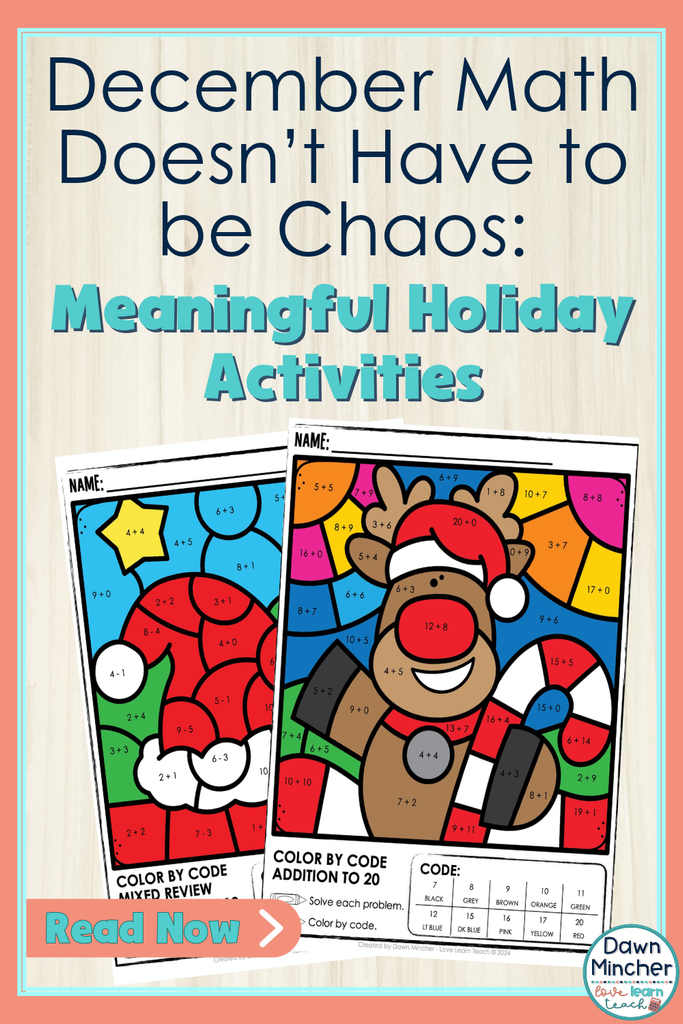
My Christmas Addition and Subtraction Color by Number Activities include 15 Christmas-themed coloring pages that focus on addition, subtraction, and mixed review. The activities provide practice with numbers up to 10, 18, and 20, making it easier to choose problems that match your students’ current skills. Your students will solve the equations and use the color code to determine which sections of the picture to color. It’s a simple format that gives your students a clear task to complete while adding a creative element to their math practice.
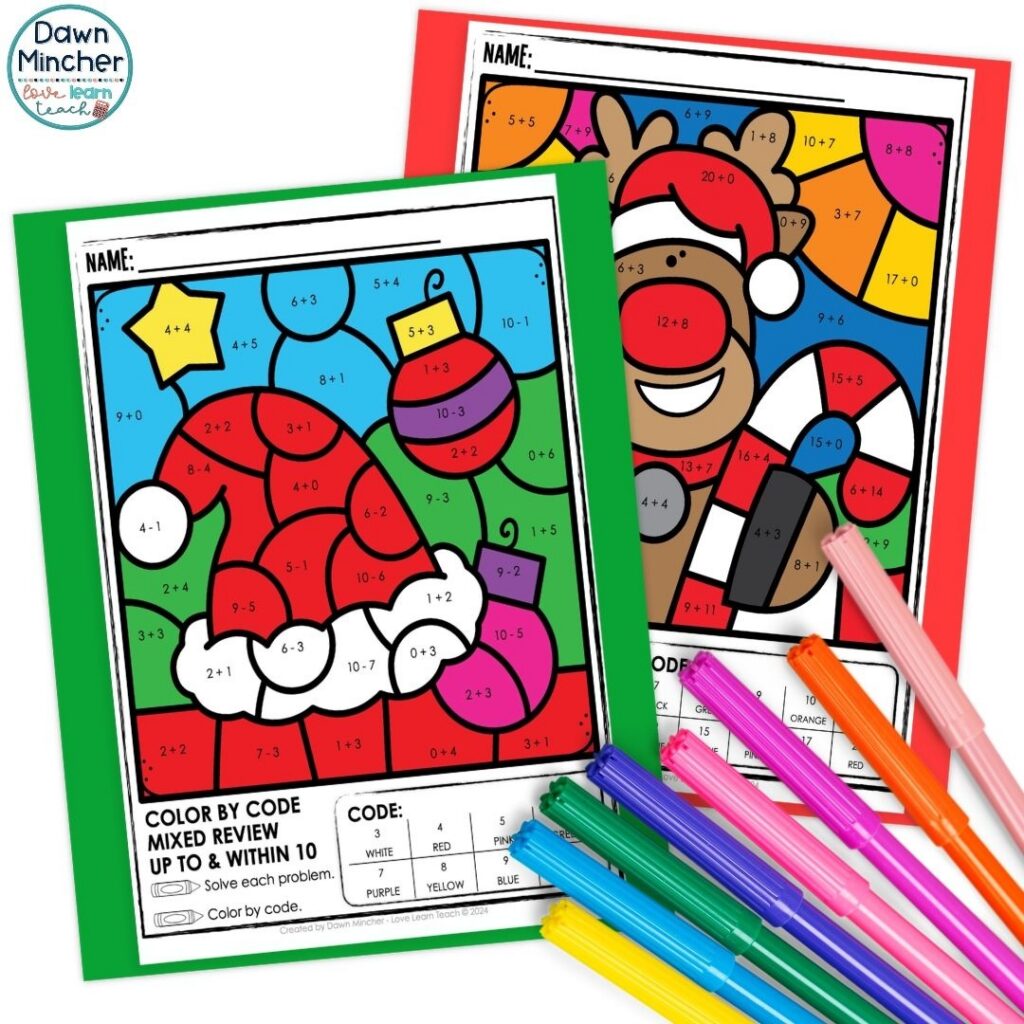
One thing I would encourage is reminding your students that the math comes before the coloring. It’s tempting for some of your students to focus on finishing the picture as quickly as possible. Have them solve the problems first and check their answers before reaching for their crayons or colored pencils. You can even ask your students to circle a problem they found challenging so you can discuss it later. This keeps the focus on practicing math skills while still letting your students enjoy the holiday activity.
Use Color by Number for Math Stations and Early Finishers
These December math activities work especially well during independent math stations. You can place a few different pages in a station and assign your students the activity that matches the skills they’re practicing. For example, one group might work on addition within 10 while another practices mixed addition and subtraction within 20. Since your students are following the same general directions, you can provide different levels of practice without creating completely different station routines.

I also like keeping color-by-number activities available for early finishers. Instead of rushing to find something for your students who finish early, you can have a designated spot where they pick up an additional math activity. You might also use them during a shorter math period, on a day with an unusual schedule, or as a quiet independent activity before winter break.
In the resource, you will find full-page and half-page printing options, along with optional workspace pages, so your students have room to show their thinking. You can choose the format that works best for your classroom and the amount of time your students have available. If you’re using these activities with younger students, consider modeling how to solve a problem, find the matching color, and color the correct section before asking them to work independently.
Try a Free Math Color by Code Sampler
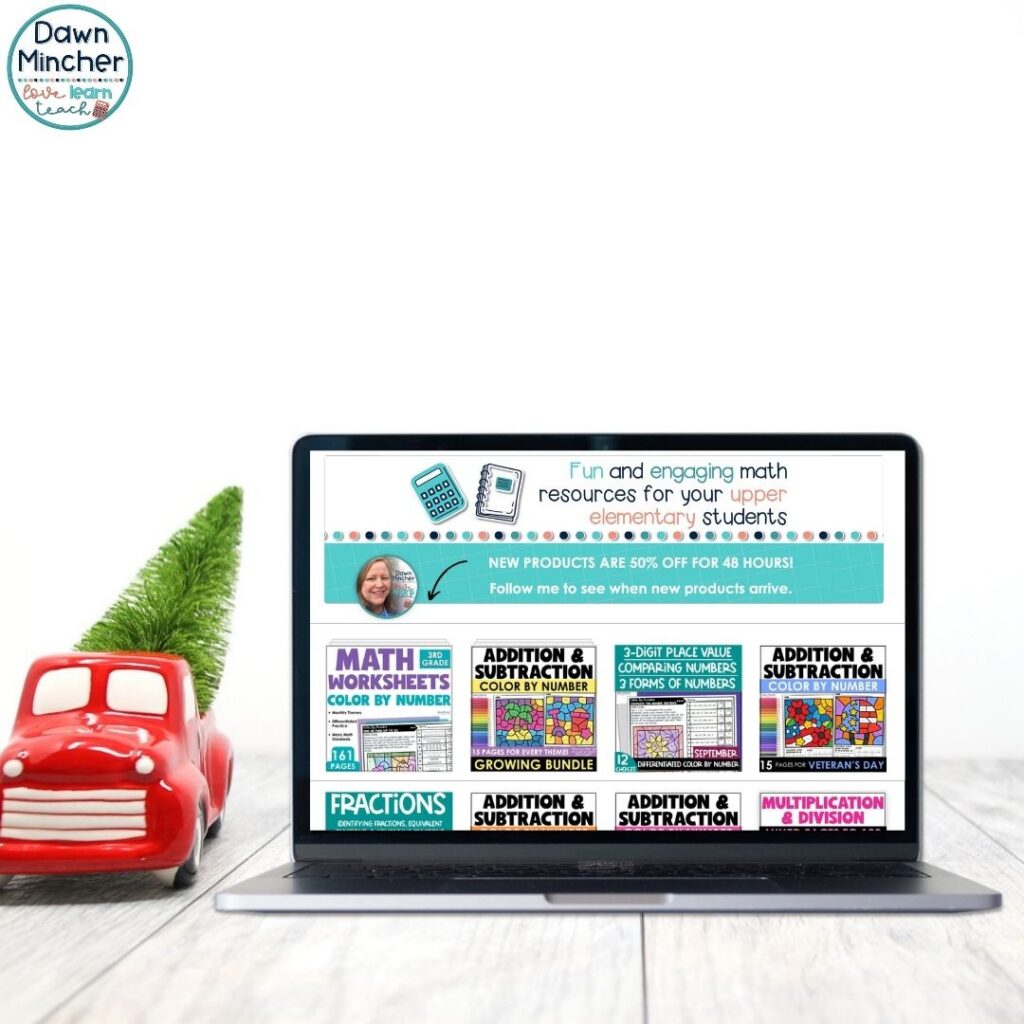
If you haven’t tried color-by-code activities with your students, you can start with my FREE Color by Code Sampler! It’s a great opportunity to introduce this style of math practice and see how it fits into your classroom routines.
You can also explore my complete Math Color by Code collection to find activities that focus on the specific math concepts your students need to practice. Whether you’re reviewing a skill your students have already learned or providing additional practice with a current concept, you can choose an activity that supports your instructional goals.
Add Movement to December Math with Winter Multiplication Task Cards
By December, you might notice that your students have a harder time sitting still for an entire math lesson. They’ve worked hard all semester, and the excitement of winter break can make it hard to stay focused. Instead of fighting that extra energy, why not build a little movement into your math instruction? Task cards are one of my favorite ways to get our students out of their seats while keeping them focused on solving math problems.
Get Your Students Moving with a Multiplication Scoot Game
My Winter Multiplication Task Cards include 40 multiplication problems with four differentiated levels. Each level has its own winter-themed picture, making it easy to identify which cards your students should complete. I also include a recording sheet, answer key, and blank task cards in the resource if you want to create additional problems.
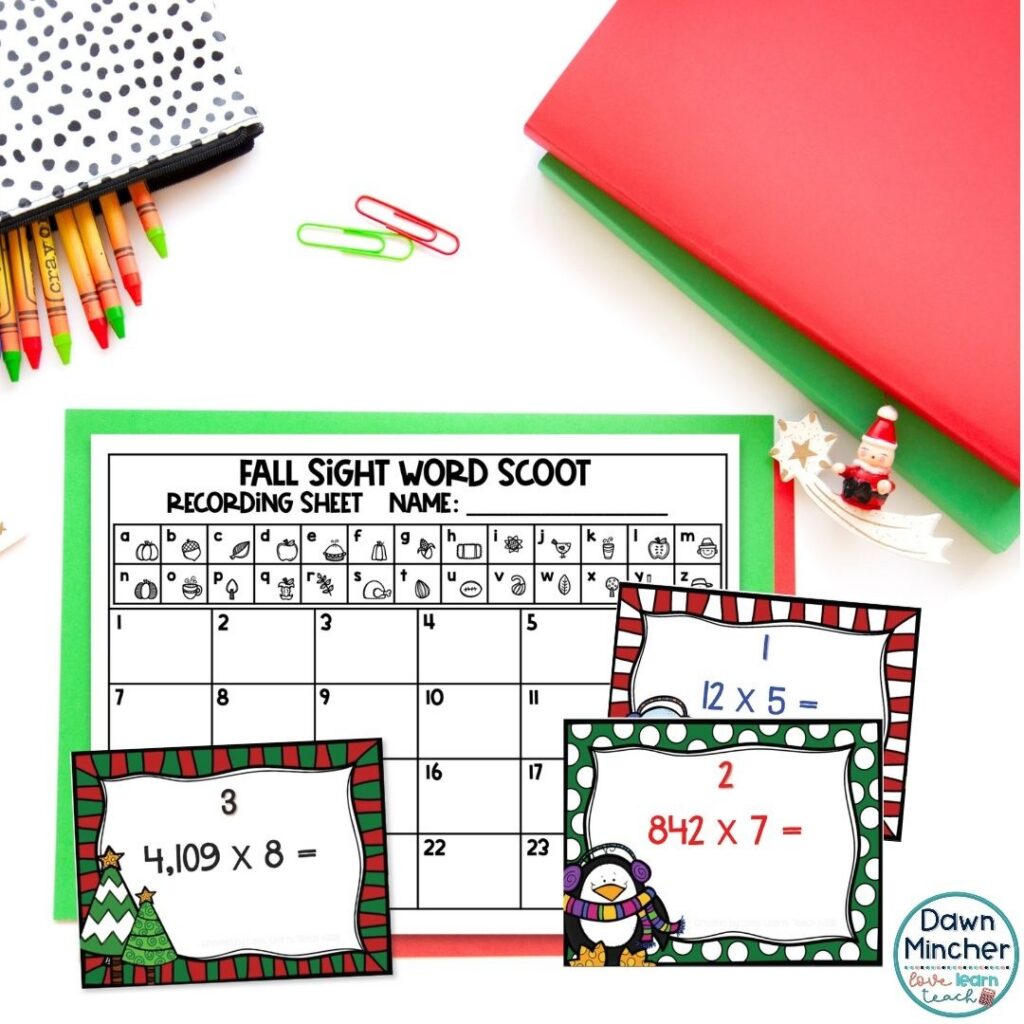
One of my favorite ways to use task cards is with a game of Scoot! Place the cards around the classroom, either on desks or at different locations. Give each student a recording sheet and have them begin at an assigned card. Your students will then solve the problem, record their answer, and move to the next card when you give the signal. Continue until your students have completed the cards you’ve selected for the activity.
You don’t have to use all 40 cards in one lesson. In fact, I recommend choosing a smaller set based on the time available and the skills your students need to practice. If you only have 15 minutes before a holiday assembly, you might select eight to ten cards for a quick multiplication review. On a day with a longer math block, you can use more cards or have your students explain their strategies after completing the activity.
Encourage Math Conversations with Partner Practice
Another option is to use the winter multiplication task cards during partner work or math stations. Have your students take turns solving problems and explaining their thinking. One student might solve a problem while the other checks the steps and asks questions. Then they switch roles for the next card. You can also have them both solve the problem independently, then share how they solved it. This gives your students opportunities to practice multiplication while talking through their strategies with a classmate.

You can also encourage your students to compare different ways to solve the same problem. For example, one student might use the standard algorithm while another breaks the problem into smaller parts using place value. Ask your partners to explain why their strategies work and how they know their answers are reasonable. These conversations can help your students strengthen their understanding instead of simply focusing on getting the correct answer.
If your students are new to partner task card activities, take a few minutes to model what productive collaboration looks like. Show them how to explain their thinking, listen to a partner, and offer help without giving away the answer. Practicing these expectations ahead of time can make the activity run much more smoothly.
Differentiate Multiplication Practice with Winter Task Cards
The differentiated levels are especially helpful when your students are working on different multiplication skills. The snowman cards feature two-digit by one-digit multiplication, while the penguin cards focus on three-digit by one-digit multiplication. The tree cards include four-digit by one-digit multiplication, and the mitten cards feature multiplication problems with two-digit factors.

You can assign specific cards based on student readiness rather than expecting everyone to complete the same problems. For example, your students who need additional practice with two-digit by one-digit multiplication can work with the snowman cards. Your students who are ready for more challenging problems can work with the tree or mitten cards. This lets everyone participate in a similar activity while practicing skills appropriate to their needs.
You might even set up separate stations with different levels of task cards. Your students can rotate through the stations you’ve assigned or work with a partner on a specific set of problems.
Plan December Math Activities Without Overcomplicating Your Week
One thing I learned about planning during busy months is that you don’t need a brand-new activity every day. In fact, constantly changing activities can create more work for you and more confusion for your students. Instead, I recommend choosing a few reliable December math activities and using them in different ways throughout the month.
Create a Simple Weekly December Math Schedule
For example, you might begin each day with a short spiral review. On Monday, introduce the week’s math focus and review any skills that need extra attention. On Tuesday or Wednesday, include a color-by-code activity during independent practice or math stations. Later in the week, use task cards to get your students moving and reviewing multiplication. You can adjust this schedule based on the concepts you’re teaching and the instructional time available.

Don’t feel like you need to squeeze every activity into one week, either. Some weeks might be better suited for independent practice, especially if your schedule includes several holiday programs or assemblies. Other weeks might give you more time for partner activities or math games. The goal is to have a few dependable options available so you can choose what makes sense for your students.
It’s also helpful to think about what your students need most during December. Some students might benefit from additional computation practice, while others need opportunities to revisit skills from earlier in the year. Look at their daily work, listen to their explanations, and pay attention to the mistakes they’re making. Then choose activities that give them practice with those particular skills. Remember, a seasonal activity is much more valuable when it connects to something your students actually need to learn or review.
Enjoy the Holiday Season Without Losing Valuable Math Time
As winter break approaches, focus on the progress your students are making rather than trying to fit in every possible activity. A few thoughtful choices can go a long way toward helping students feel confident in their math skills. When that final bell rings before winter break, you can feel good knowing you made the most of your instructional time while still enjoying the season with your students!
Find More Math Activities for Your December Lessons
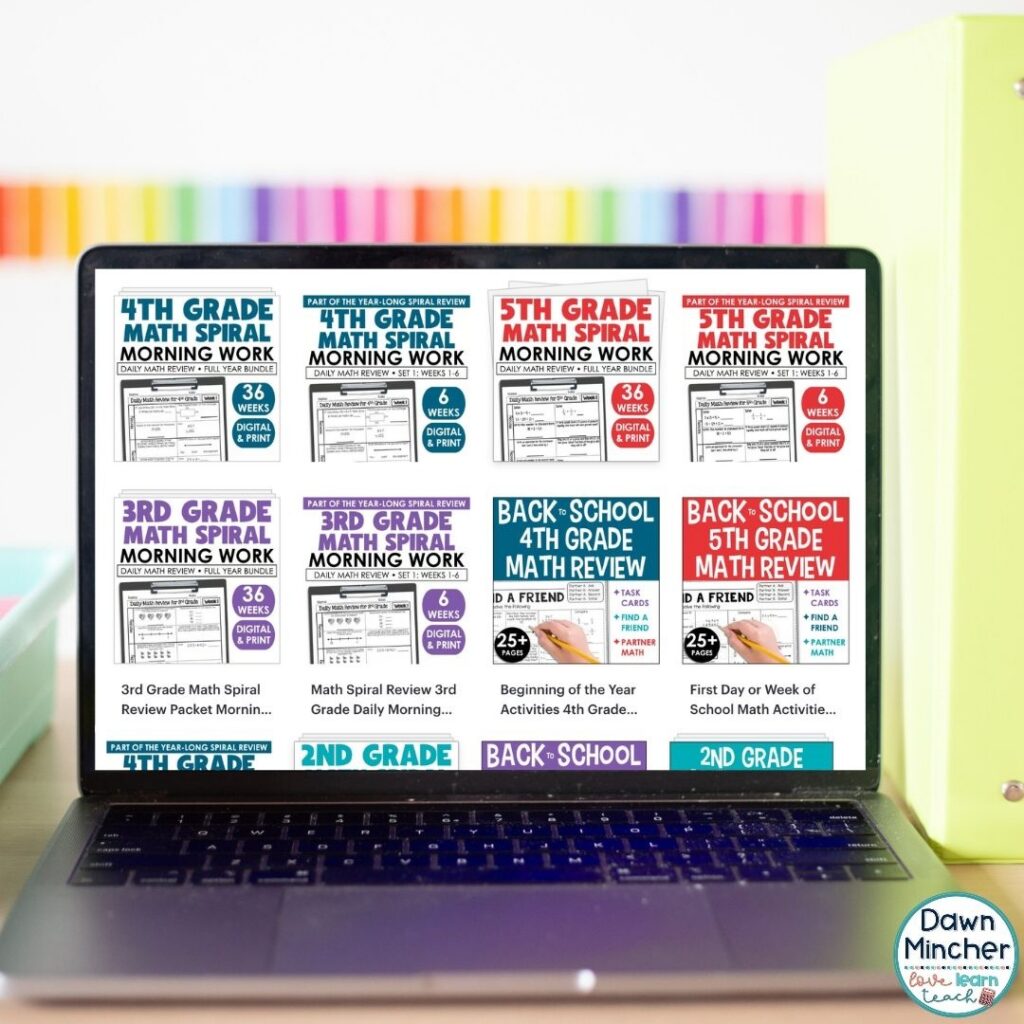
If you’re looking for additional ways to keep your students practicing math throughout December and beyond, explore my TPT store. You’ll find math resources designed to help you build consistent routines, provide meaningful practice, and support your students working at different skill levels.
From spiral review and daily math fluency practice to color-by-code activities and task cards, there are plenty of options to help you plan lessons that fit your students’ needs. Choose the resources that support the skills you’re teaching and make your daily routine a little easier to manage.
Save for Later
Save this post to your favorite Pinterest board so you can come back to these holiday math activities when you need ideas for spiral review, independent practice, math stations, or multiplication games.