October has a funny way of making an ordinary math lesson compete with pumpkins, costumes, candy, and approximately seventeen conversations about Halloween. Meanwhile, you still have standards to teach and skills your students need to practice. This is when low prep October math activities can make your teacher life much easier. You can bring a little seasonal fun into math without spending your Sunday or evening creating something elaborate.
Keep Your October Math Simple and Purposeful
October math does not need to mean changing everything you already planned for the month. Look for simple ways to add seasonal activities to the parts of your day that already need something. Morning work, math stations, independent practice, and early finisher time are easy places to start. You can keep your regular instruction moving while making practice feel a little different.

Before choosing an activity, think about what you actually need your students to practice. Maybe your fourth graders need continued review as they learn new skills. Your younger students may need more practice with addition and subtraction. Starting with the skill keeps your October math activities useful, rather than adding something just because it has a pumpkin on it.
It also helps to think about how independently your students can complete an activity. Low prep for you should not mean twenty minutes of explaining directions every time you use it. Model the routine once, practice it together, and then reuse that familiar format. Your students know what to do, and you gain an activity that is much easier to pull out again.
Start Your Day With October Math Spiral Review
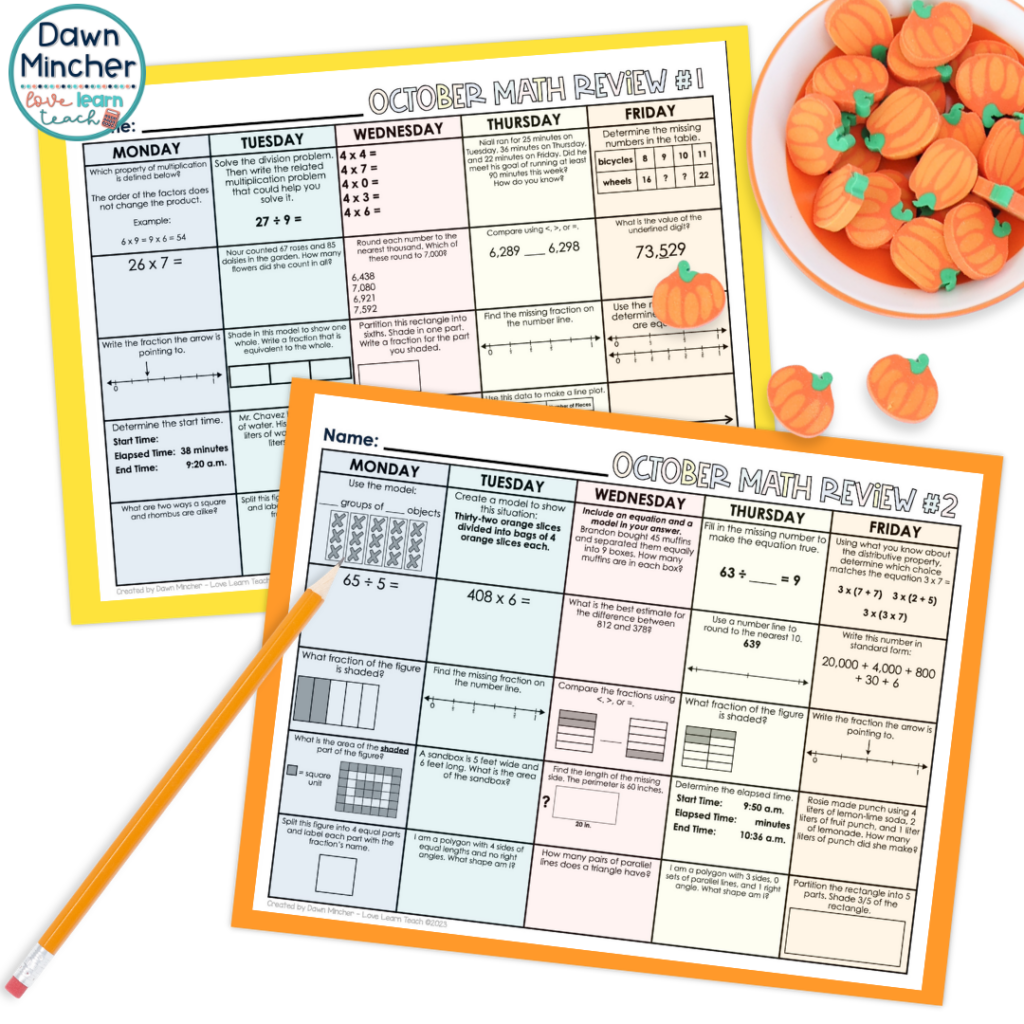
Morning work was one of my favorite places to add October math because the time is already built into your schedule. My October Math Spiral Review gives your students a short set of problems to work through each day. I provide you with four weeks of practice, so you can create a consistent routine throughout the month. Your students get regular math practice without having to begin every morning with a new activity.
The October set introduces a new fourth-grade skill each week. Your students will work on multiplication during week one and division during week two. Week three introduces multiplicative comparisons, followed by multiplicative comparison word problems during week four. The daily review also helps your students refresh previously learned skills while practicing newer fourth-grade skills.
Build a Routine Around Your October Math Review
A spiral review becomes much more useful when your students know exactly what to do with it. Make sure students know the complete routine, from walking in the door to completing the daily review. By explicitly teaching each step, you will build a strong morning routine that students can complete independently.
There are different ways you can present the daily review to your students. You might choose a printed format that students keep in their desk or project the page to the board while students write answers in a notebook. Whatever you choose, students need to know which problems should be done, where to write their answers, and how much of their work you expect to see. Also, make sure that students know what to do when they reach a problem they cannot solve immediately. A familiar routine helps your students focus on the math instead of waiting for directions.

And. . . don’t forget to decide how you want to review the problems afterward. Will students turn in their work or will you go through each problem together? However you review student answers, make sure to pay attention to problems that cause confusion across the class. Those responses can help you see which previously taught skills may need another look.
As your students become familiar with the routine, encourage them to begin more independently. They can enter the classroom, get their October math ready, and start working. That consistency can be especially helpful during a month when classroom excitement starts rising. Your math routine stays predictable even when October definitely does not.
Introduce October Math Color by Code Practice
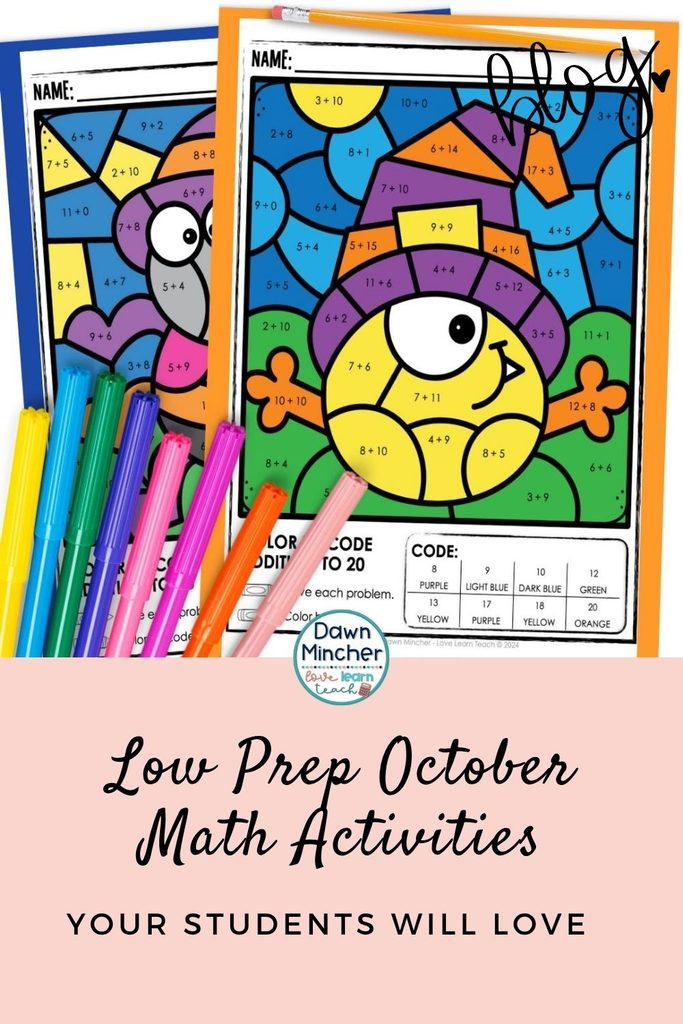
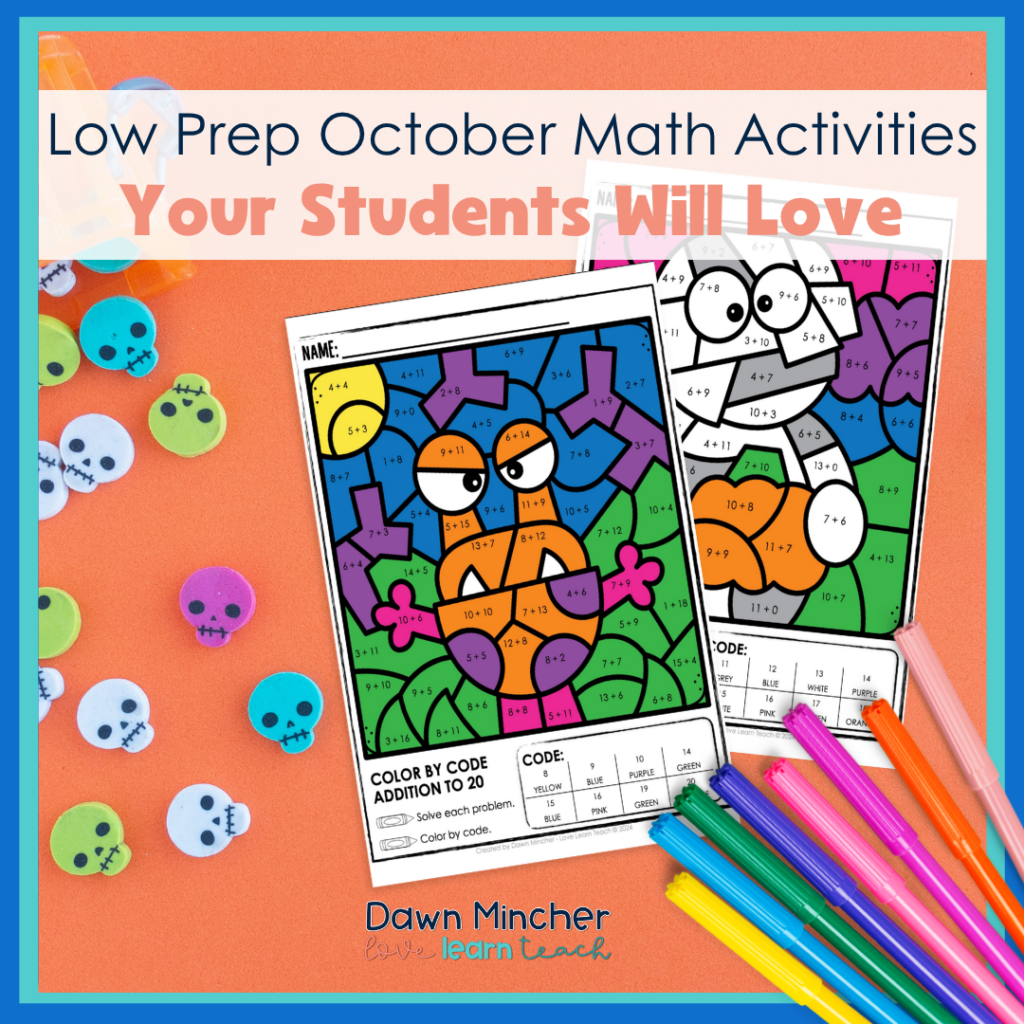
Sometimes your students need additional practice, but another traditional worksheet is not exactly thrilling. My October color by code activities give your students a different way to practice math skills. Your students solve each problem and then color the picture using the color that matches their answer. The math still comes first, but the finished picture helps to strengthen your students’ engagement!
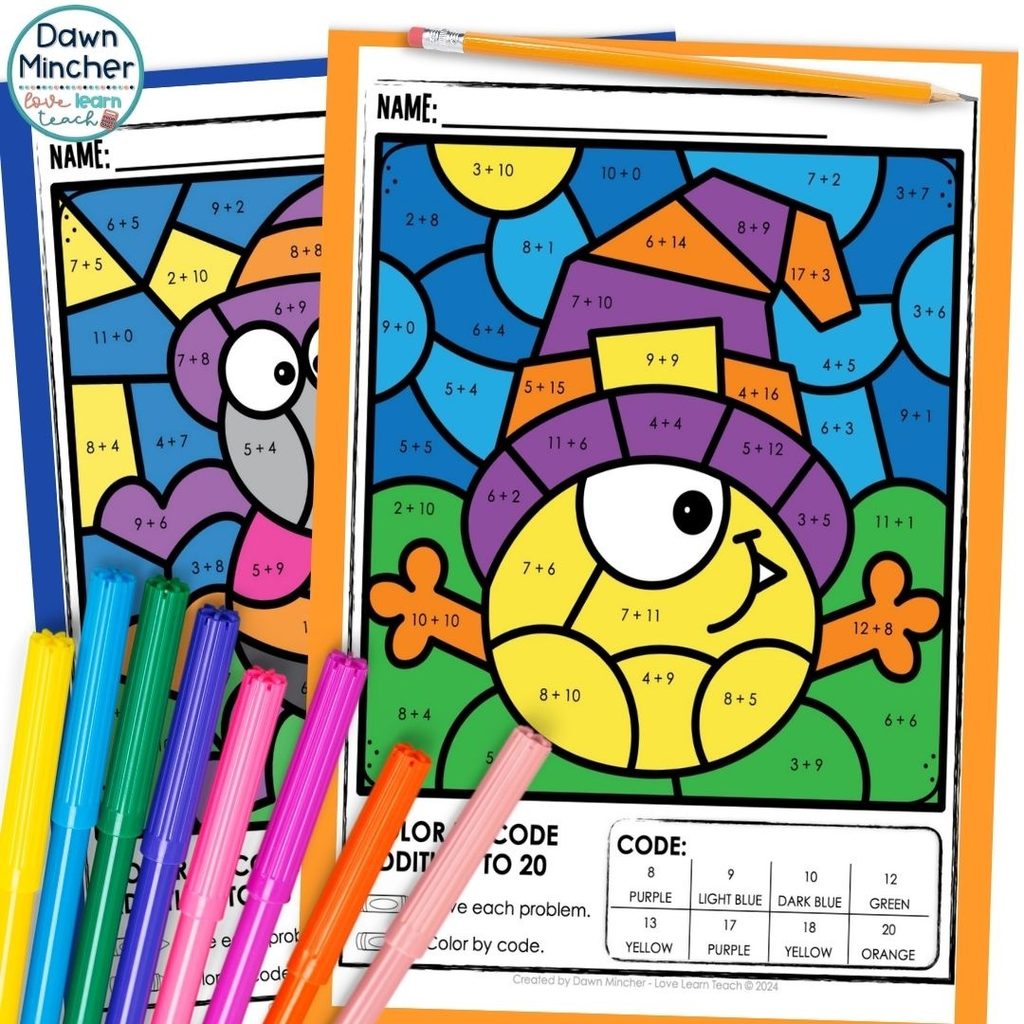
Each set includes multiple skills and levels so you can choose the practice that fits your students. Choose one to focus on or easily differentiate based on student needs. That variety lets you select practice based on the skills your students are currently working on.
Setup is simple. Choose either the full-page or half-page version and select an optional workspace page if your students need one. You can copy the coloring and workspace pages front to back, then provide crayons, colored pencils, or thin markers.
Try This Free Color by Code Sample!
Want to test out a color by code activity? I’ll send you a free Seasonal Color by Code sampler to try out with your students to see if it’s a good fit for them!
Tips for Using Color By Code Activities
Color by Code can feel like a fun October math activity, but your students still need to focus on solving each problem. Before they begin, remind your students that the coloring comes after the math, and the picture will only work if they have the right answers. Have them solve a problem, find the matching answer, and then color that section. This simple order keeps your students from jumping straight to the coloring.

For your students who tend to rush or try to do everything in their heads, ask them to show their work before reaching for their coloring supplies. The optional workspace pages can give them a separate place to solve each problem. You can also have your students complete several problems before they begin coloring. Choose the routine that keeps your students focused on accuracy instead of speed.
As your students work, circulate and look at both their answers and their completed picture. If a color does not seem to fit, you can encourage your students to return to that problem and check their work. This gives them a natural reason to revisit an answer without immediately telling them it is incorrect. The seasonal activity stays fun, but the math remains the reason your students are completing it.
Add Variety to Your Math Routine
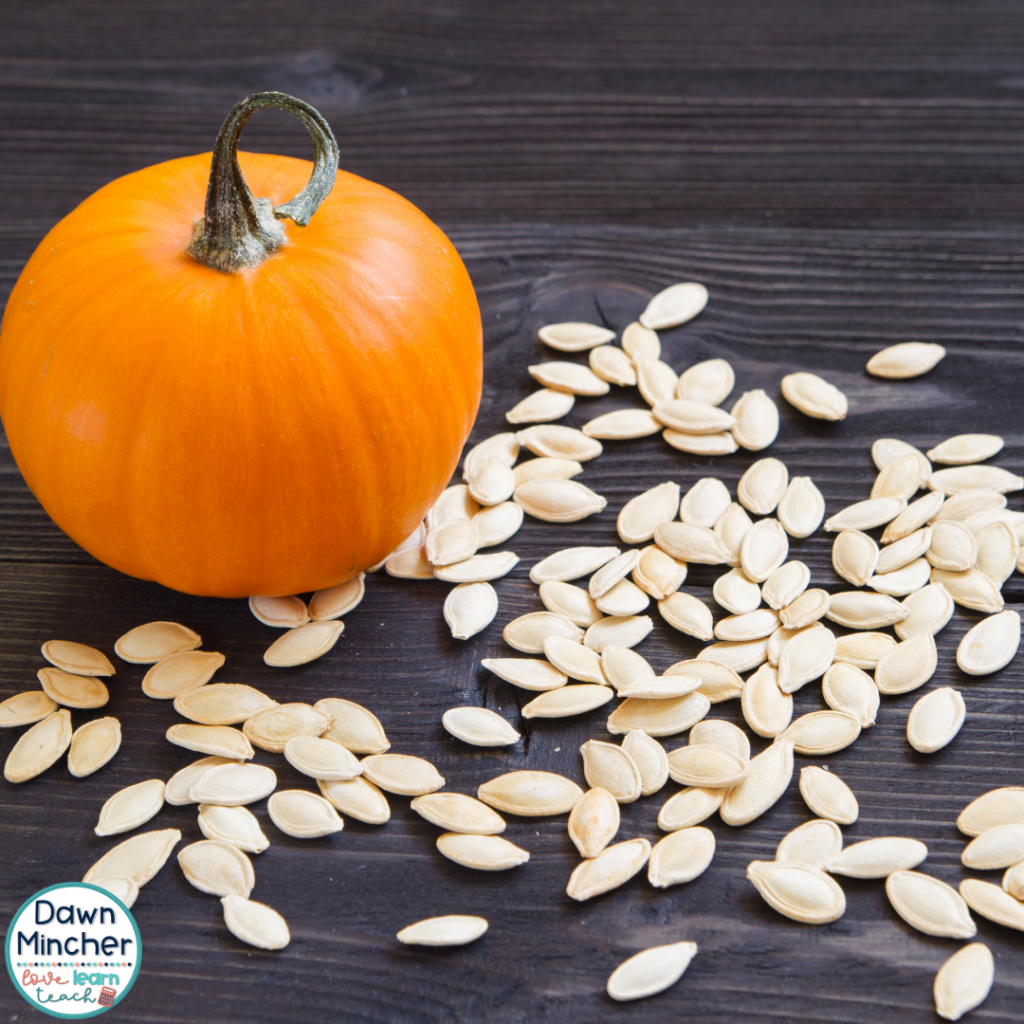
Not every October math activity needs a printable or special resource. A pumpkin can become an easy estimation activity with almost no planning. Have your students estimate something appropriate for their grade level, such as its weight or circumference. After everyone records an estimate, measure the pumpkin together and compare the results.
Would You Rather questions are another easy way to bring seasonal fun into your math block. Give your students two choices, such as 8 bags with 6 candies or 6 bags with 9 candies. Your students will choose an option, solve the math, and explain why their choice makes sense. You can change the numbers and operations to match whatever skill your class is practicing.
You can also have your students create their own October math word problems. Give them a seasonal topic such as pumpkins, leaves, costumes, or candy. Ask them to write a problem using the math skill you are currently teaching. Place them into partners so they can swap problems, solve them, and check each other’s answers.
For an even quicker activity, grab a few dice and play Roll and Solve. Your students roll the dice and use the numbers to create problems based on the skill you choose. Younger students might add or subtract, while your older students could multiply or work with place value. Since you control the directions, the same simple activity can change as your October math skills change.
Make October Math Easier on Yourself
October can be exciting without making your math block harder to manage. A few well-chosen activities can bring in the fun while keeping your students focused on the skills they need. Daily spiral review gives you consistent practice, while Color by Code activities offer another way to reinforce computation.
The goal is not to fill every math lesson with pumpkins and Halloween activities. Choose October math resources that fit the routines you are already using and give your students worthwhile practice. When an activity is easy to prepare, easy for your students to understand, and connected to your math goals, everyone wins!
Additional Math Resources
If low prep October math makes your month easier, you can find even more options in my store. I have a growing collection of Color by Code activities covering different grade levels and math skills. Choose activities that match what your students are currently learning or need extra practice with.

You can also find spiral review resources for multiple grade levels. These are helpful when you want consistent practice without searching for something new each day. Plus, they don’t eat up hours of your students’ time to complete. Choose the grade level that fits your students and work the review into a routine that already makes sense in your classroom.
Head over to my store to explore the Color by Code activities, spiral reviews, and the other math resources I have to offer. Whether you need seasonal practice or something you can use throughout the year, you can find options for your classroom. The goal is simply to spend less time creating practice and more time using it with your students!
Save for Later
Save this post to your favorite math Pinterest board, so you have these October math ideas ready when October gets busy. A few options can help you keep math practice consistent while still giving your students some seasonal fun.