The week before Thanksgiving break can make it feel like an extra challenge to keep students focused. Your students are thinking about turkey, pumpkin pie, family gatherings, and a few days away from school. Meanwhile, you’re trying to squeeze in meaningful instruction before everyone heads out the door. You still have math skills to practice. Another worksheet might not be the most exciting thing on your students’ minds. The good news is that you don’t have to put learning on hold or plan an elaborate Thanksgiving lesson to keep everyone engaged. A few well-chosen Thanksgiving math activities can reinforce important skills while adding a little seasonal fun.
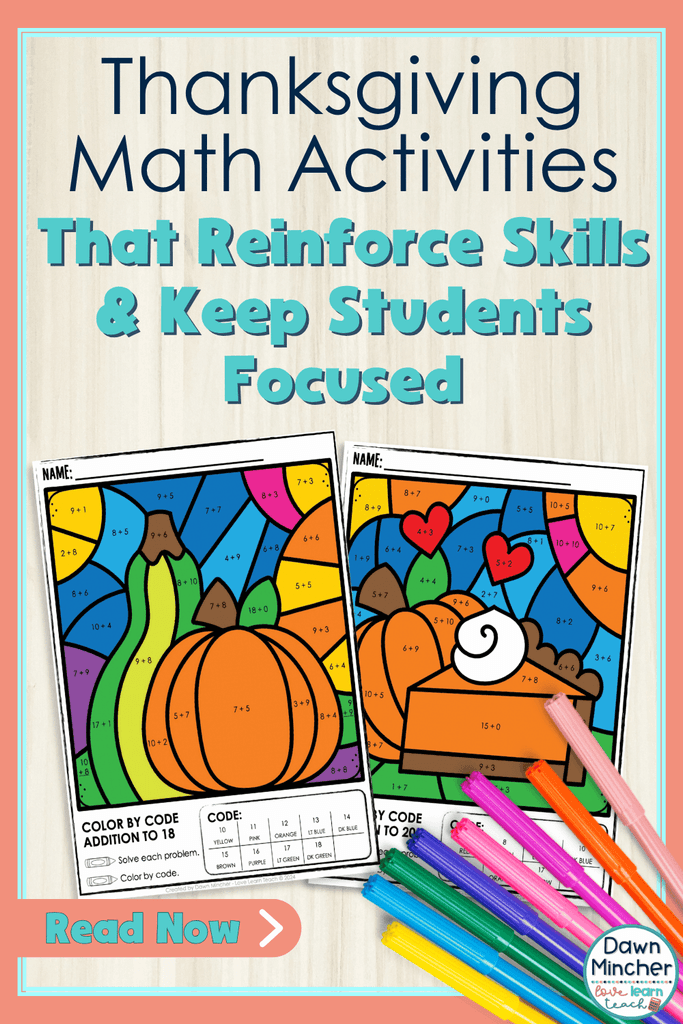
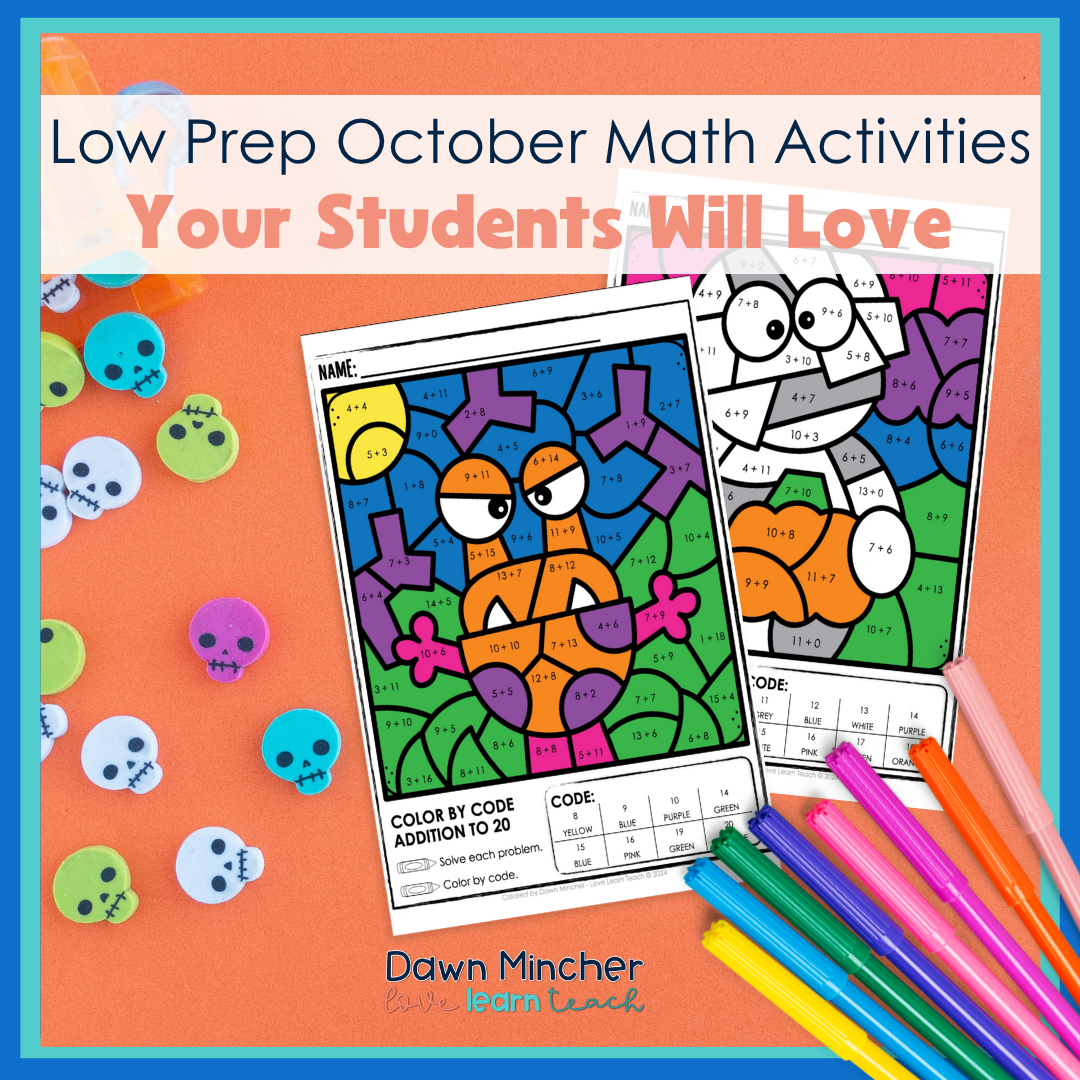
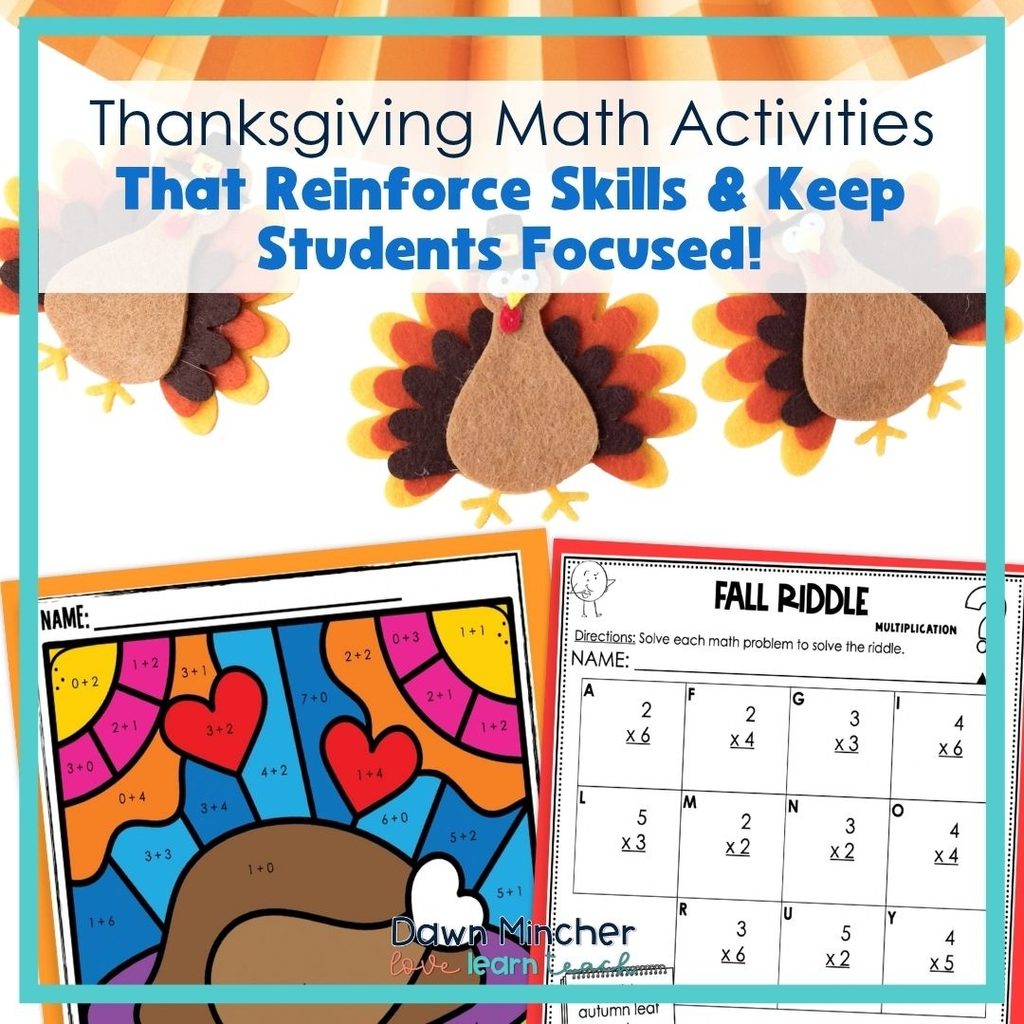
Make Math Practice Fun with Thanksgiving Color by Number Activities
Sometimes, you just need an activity that your students can work on independently while you help others, catch up on assessments, or prepare for the next lesson. That’s where Thanksgiving color by number activities can be a lifesaver! Your students get excited about completing a seasonal picture, and you get an opportunity to reinforce important math skills. It’s a nice change from regular worksheets without requiring you to plan something completely different.
Of course, we all know how quickly our students can get excited about the coloring part and forget about the math! Before handing out the activity, take a minute to show your students how it works. Walk through an example together, showing them how to solve the problem and use their answer to determine the correct color. Remind your students that the math comes first, even if they’re eager to see their finished picture. If they rush through the problems, encourage them to go back and check their work before reaching for their crayons.
Color By Number Activities for Your Younger Students
For your younger students, my Thanksgiving Addition and Subtraction Color by Number activities provide 15 activities covering addition, subtraction, and mixed review. The problems focus on numbers within 10, 18, and 20, so you can choose the practice that matches what your students are learning. I include different kinds of work spaces that can be especially helpful for students who need room to write out their thinking instead of trying to solve everything mentally.
Color By Number Activities for Your Older or Advanced Students
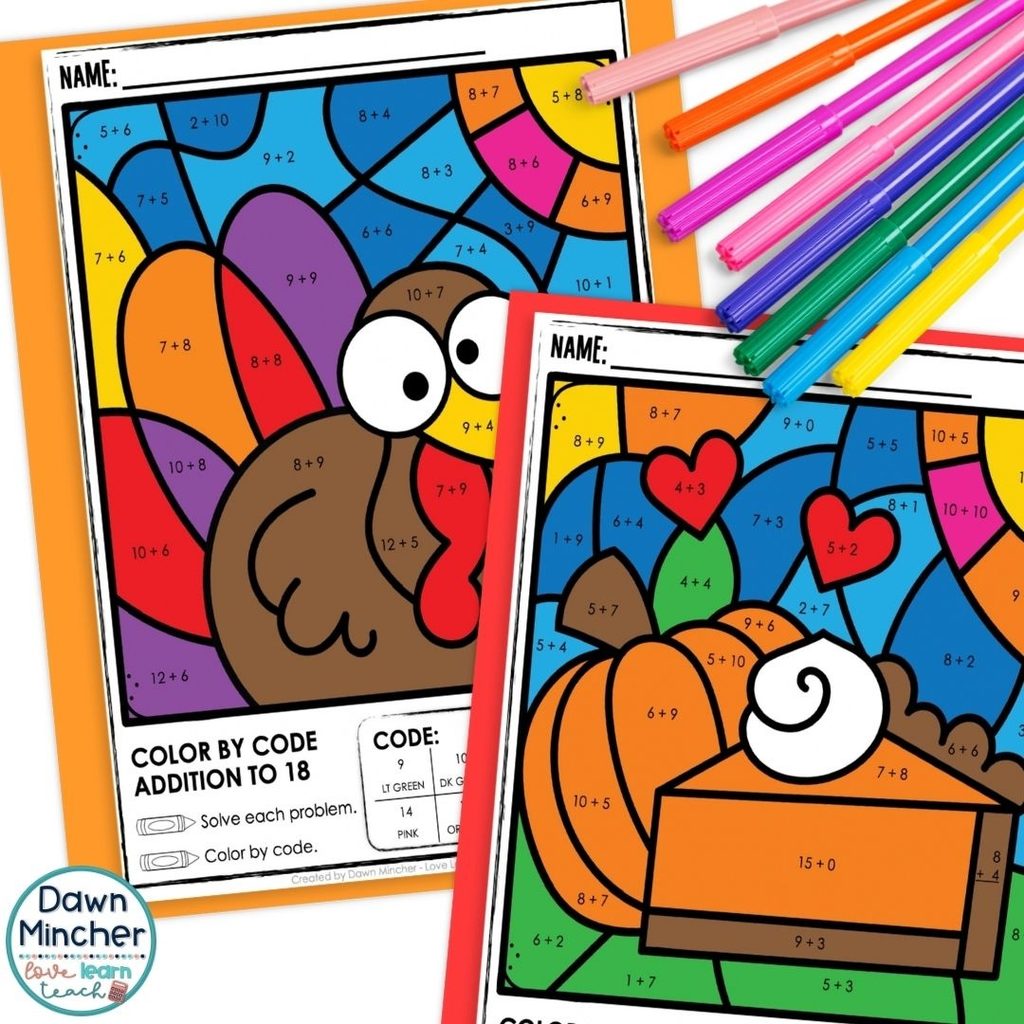
For your students working on more advanced skills, my differentiated Color by Number activities cover rounding to the nearest 10 and 100, multiplication, division, and word problems. The set includes 12 activities, with four difficulty levels for each skill area. You can select a level based on each student’s readiness. For example, one group may practice basic multiplication facts while another works through multiplication word problems. Everyone participates in the same seasonal activity, but the math practice more closely matches their needs.
One important difference with this set of activities is how the coloring works. Your students will still solve each problem, circle their answers, and use those answers to identify the correct colors. The numbers in the picture represent the problem numbers, not the answers themselves. I’d recommend modeling one example before your students begin so they understand how to use the answer choices. Once they know the process, they can concentrate on solving the math problems.
Want to Try Color by Code in Your Classroom Today?
Want to try a free color by number activity with your students? Grab my free Seasonal Color by Code Math Sampler! You’ll get 18 differentiated math pages for grades 2–5. The sets cover six seasons, from Valentine’s Day through Christmas. The sampler also includes recording sheets, answer keys, and flexible printing options. It’s a simple way to try seasonal math practice and have additional activities ready for other times of the year!
Get Your Students Moving During Thanksgiving Math Activities
As Thanksgiving break gets closer, having your students sit at their desks for an entire math period can feel like a challenge. Sometimes, a little movement is exactly what they need to refocus. Task cards give students a chance to get out of their seats while continuing to practice important math skills. You can change the pace of your lesson without introducing an entirely new concept.
One of my favorite ways to use task cards was with a game of Scoot. I placed a card at each desk and had my students begin at different spots around the room. My students solved the problem at their starting location, recorded their answers, and moved to the next card when I gave the signal. Before starting, we practiced what moving quietly and staying on task should look like. Those few minutes spent reviewing expectations helped the activity run more smoothly.
Thanksgiving Multiplication Task Cards
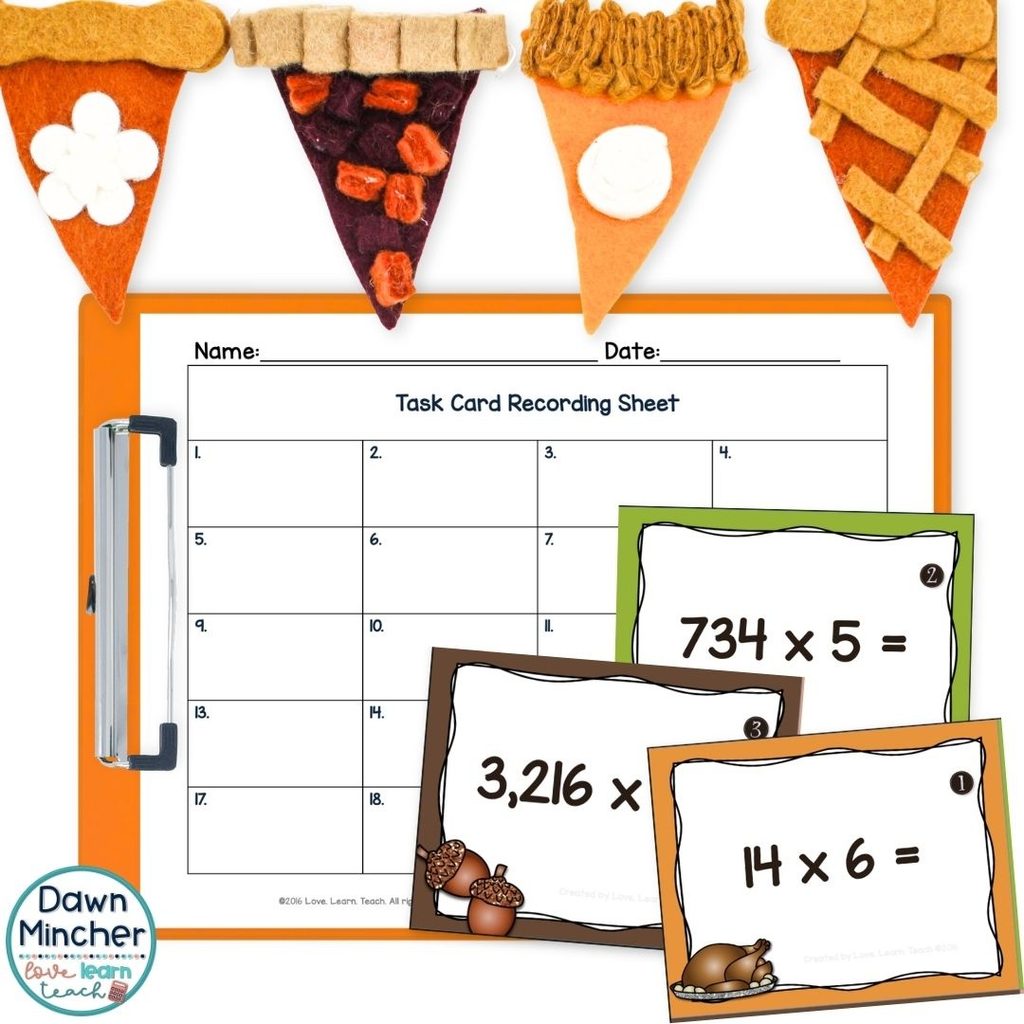
My Thanksgiving Multiplication Task Cards include 20 problems with four differentiated levels. Each level is identified by a different seasonal picture, such as a turkey, leaf, acorn, or apple. This makes it easier to select cards based on the multiplication skills your students are ready to practice.
You don’t have to use every card or assign the same problems to all your students. If some of your students are still working on multiplying by one-digit numbers, choose cards that reinforce those skills. Students ready for more challenging problems can work with larger numbers or two-digit factors. You could also place different sets of cards at math stations and have your students work through the appropriate level. The resource includes blank cards, so you can even add your own problems when needed.
Another option is to have your students work with partners. Give each pair a few cards and ask them to solve the problems independently, then compare their work. If their answers don’t match, encourage them to explain their steps and find where their thinking differed. This gives your students a chance to talk through multiplication strategies instead of simply checking whether an answer is right or wrong.
Keep Routines Going with November Math Spiral Review
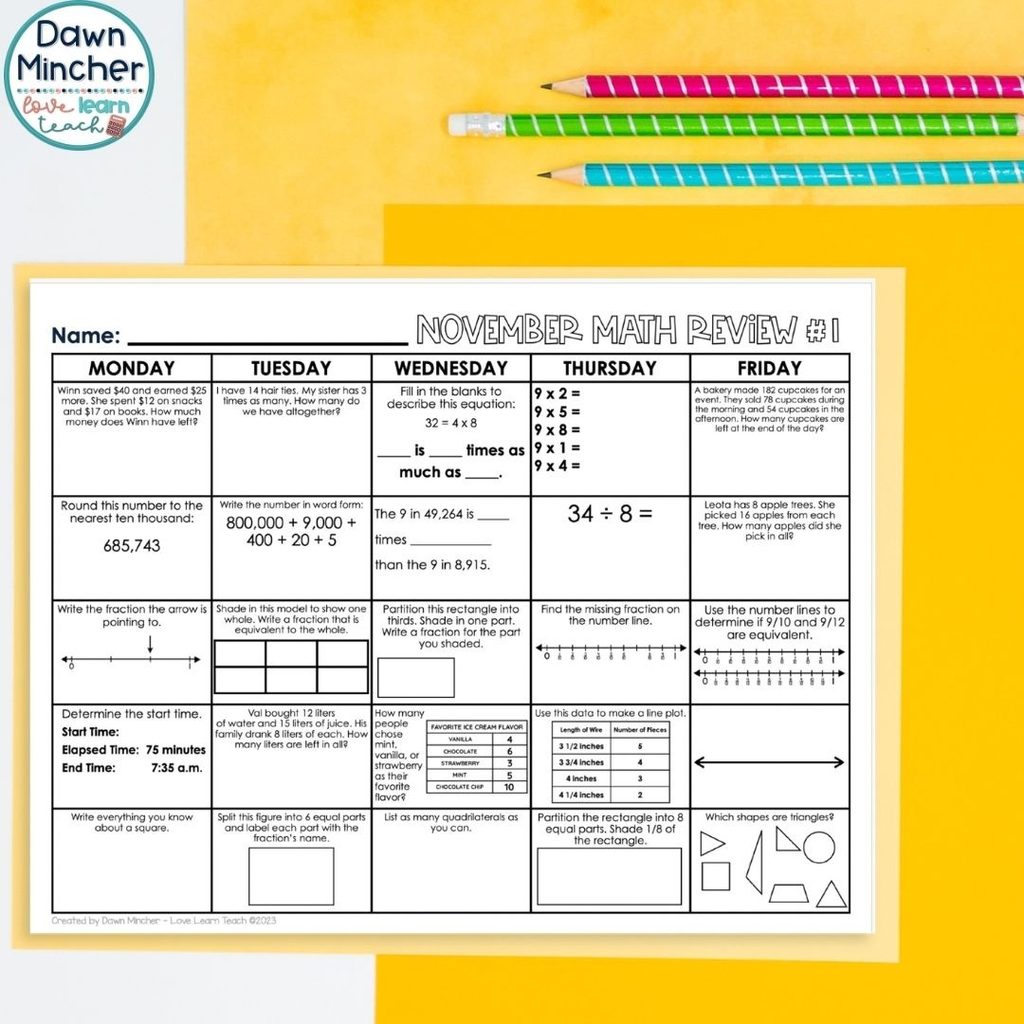
By November, your regular classroom schedule can feel like it has a mind of its own. Between special activities, schedule changes, and students counting down to Thanksgiving break, you’re often just trying to keep everyone on track! That’s why I always appreciated having familiar routines in place. Not every Thanksgiving math activity needs to be something new or exciting. Sometimes, sticking with what your students already know is exactly what makes the day run a little more smoothly.
My 4th Grade November Math Spiral Review includes four weeks of practice. It reviews third-grade math standards while introducing and reinforcing fourth-grade skills. The resource includes questions involving operations, place value, word problems, factors and multiples, patterns, and fractions as the review progresses. This makes it useful for helping your students revisit earlier learning while building their understanding of new concepts.
How to Use Spiral Review
If you already use morning work, spiral review can be one less thing to think about when your students walk through the door. Instead of scrambling to find something for everyone to do, you can have a few math problems ready for your students to work on independently. Once everyone has settled in, choose a couple of problems to review together. You don’t have to go over every question, especially if your students show they understand the skills. Focus on the problems that caused confusion or give your students time to explain how they arrived at their answers.
You can also use spiral review as a warm-up at the beginning of math class. Give your students a few minutes to complete the problems before moving into your regular lesson. As they work, look for patterns in their answers. Are several of your students making the same place value mistake? Are they struggling to decide which operation to use in a word problem? Those observations can help you decide what needs a quick reminder and what might require additional instruction.
Add a Little Mystery with Multiplication Riddles
Sometimes, your students need a reason to get excited about practicing skills they’ve already learned. Multiplication facts are a perfect example. You know your students need repeated opportunities to build accuracy and fluency, but completing another set of multiplication problems isn’t always their favorite activity. Adding a riddle gives them something to figure out along the way.
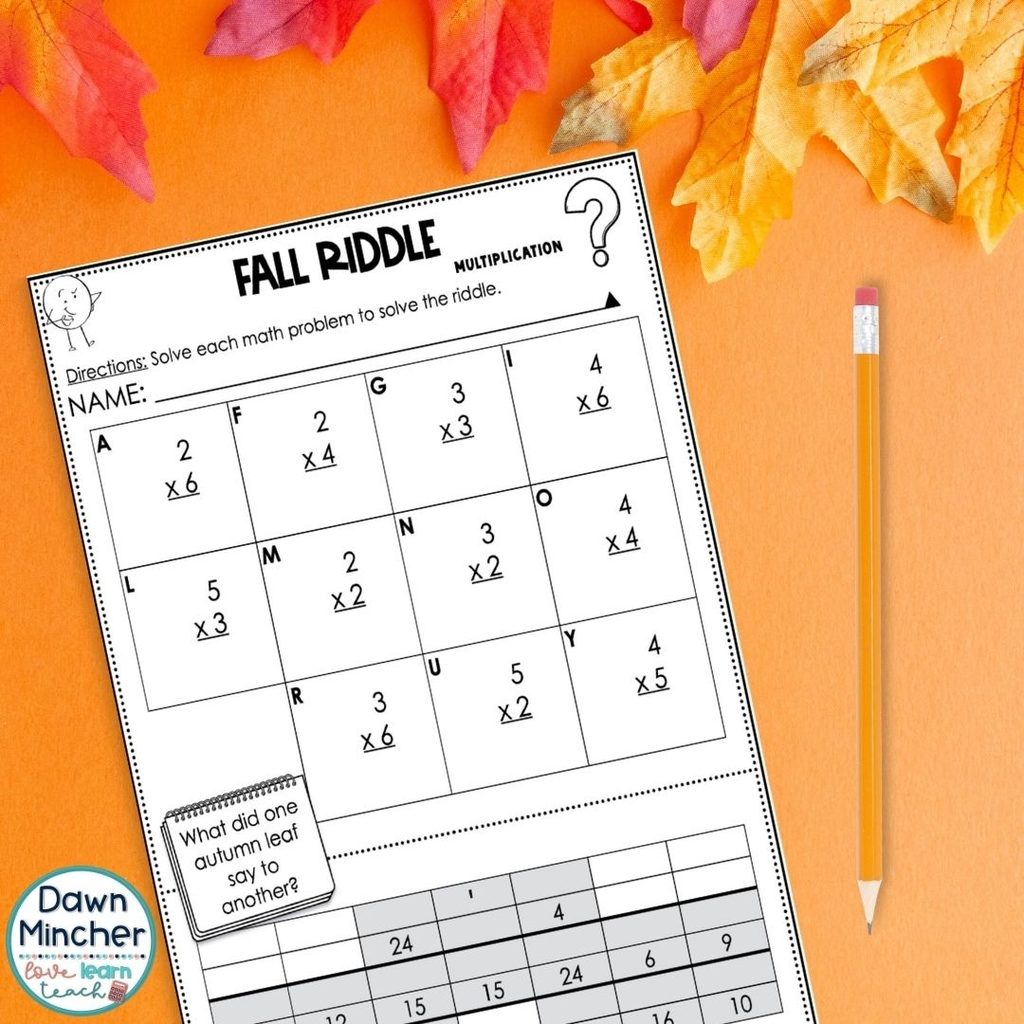
My Fall Multiplication Math Riddles include four riddles covering multiplication facts from 2 through 9, along with mixed practice. In this activity, your students solve the multiplication problems and use the letter clues to figure out each riddle’s answer. Instead of simply reaching the bottom of a worksheet, they solve a mystery. The activity keeps the focus on multiplication while adding a little fun.
Before your students begin, you might ask them to predict the answer to the riddle. Let them share a few guesses, but explain that they’ll need to solve the multiplication problems to find out. Once they’ve finished, have them read their answers to see whether the riddle makes sense. If the letters don’t form a recognizable answer, use it as an opportunity for them to revisit their multiplication facts. Encourage your students to find and correct their mistakes rather than giving them the solution immediately.
Find More Thanksgiving Math Activities for Your Classroom
Planning for the weeks leading up to Thanksgiving doesn’t have to mean creating an entirely different set of math lessons. You can continue working toward your instructional goals while giving your students chances to practice in different ways. The key is choosing activities that match what your students need rather than adding something seasonal just because it’s November.
If your students need more support with basic computation, start with addition and subtraction color by number activities. For multiplication practice, consider task cards that let your students work at different levels or riddles that focus on specific facts. If you’re trying to maintain a consistent routine, spiral review can help you revisit skills without taking over your math period. Think about what your students are working on right now and choose the activity that supports that learning.
You can explore these Thanksgiving math activities, and more, in my TPT store. You’ll find math resources for different skills, grade levels, and classroom routines. Whether you’re looking for independent practice, differentiated activities, or ongoing review, you can choose what fits your students and your plans.
Make Thanksgiving Math Practice Meaningful and Manageable
The days before Thanksgiving break can be a little unpredictable, but that doesn’t mean meaningful math practice has to stop. You don’t need an elaborate holiday project or a completely new lesson plan to keep your students learning. Sometimes, presenting a familiar skill in a different way is enough to bring fresh energy to your math time. Choose the Thanksgiving math activities that work for your students, your schedule, and the skills you’re teaching. Hopefully, you’ll head into Thanksgiving break feeling like you made the most of those busy November days.
Save for Later!
Thanksgiving will be here before you know it! Save this post to your favorite Pinterest board so you can come back to these Thanksgiving math activities when you’re ready to plan your November lessons.